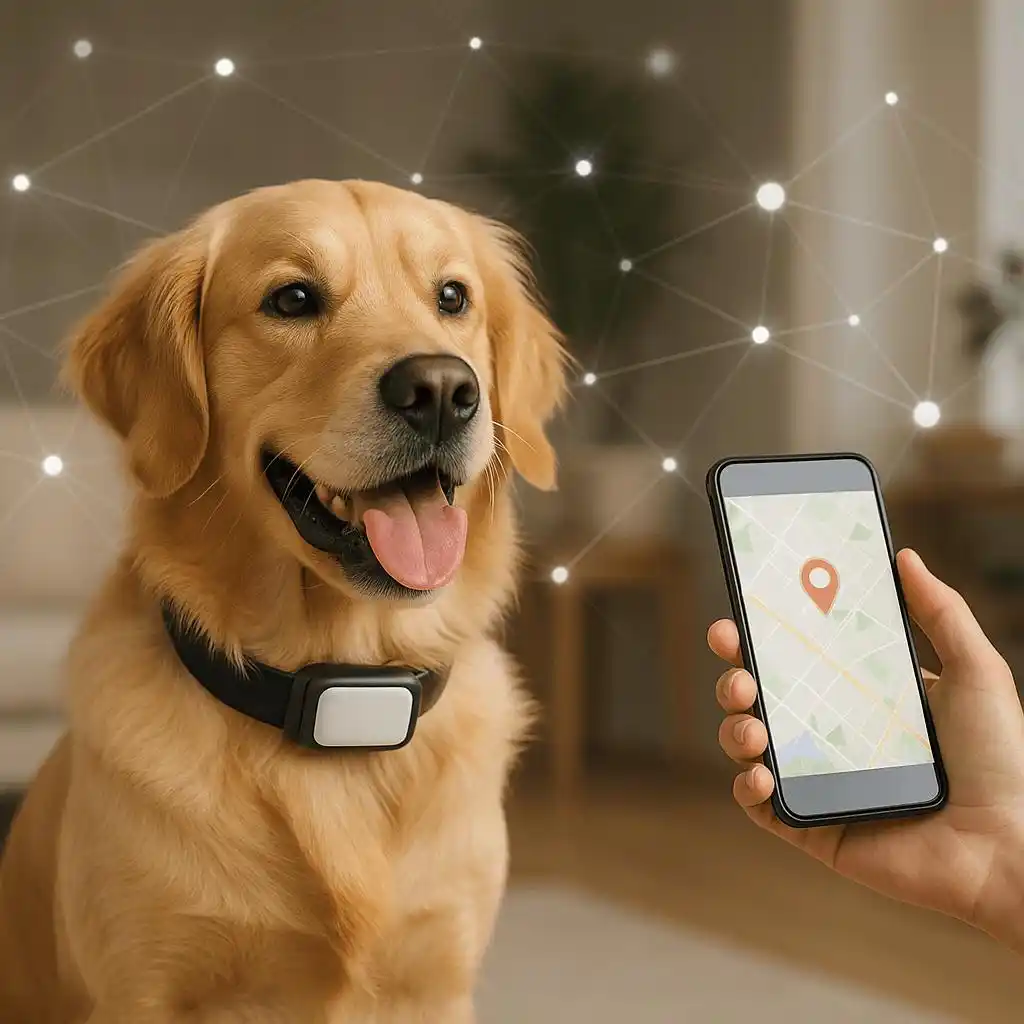
Imagine taking your dog for a walk in a park when it suddenly runs off to explore an unfamiliar area. You call its name, search nearby paths, and begin to worry because you cannot see where it went. Situations like this are one reason many dog owners use GPS dog trackers to monitor their pets’ locations.
GPS dog trackers work by using signals from satellites to determine a device’s location and, in many cases, transmitting that information to a smartphone through a cellular network or another supported communication system. Owners can then view the reported location through a compatible tracking app, depending on the device’s capabilities and connectivity.
These devices are commonly attached to a dog’s collar or harness and can provide valuable information about a pet’s whereabouts. Some models offer frequent location updates, location history, and alerts when a dog leaves a designated area. However, not every tracker provides the same features, and tracking accuracy can vary depending on environmental conditions, signal availability, and battery life.
Understanding how GPS dog tracking works involves more than knowing that satellites are involved. It also requires understanding how a tracker calculates its position, how location information reaches an owner’s phone, and what happens when connectivity is interrupted.
In this guide, we’ll explain the technology behind GPS dog trackers, explore how they operate step by step, examine the factors that affect their accuracy, and discuss their benefits and limitations. By the end, you’ll have a clear understanding of how GPS dog trackers work and how they can support responsible pet ownership.
What Is a GPS Dog Tracker?
A GPS dog tracker is an electronic device designed to help pet owners determine and monitor their dog’s location using Global Positioning System (GPS) technology. These devices are commonly attached to a dog’s collar or harness and can provide location information through a compatible smartphone app, dedicated receiver, or tracking platform, depending on the model.
GPS dog trackers are particularly useful for understanding where a dog has traveled and helping owners search for a pet that has wandered away. Some devices also offer additional features, such as location history, virtual boundary alerts, and activity monitoring. However, the available functions vary by device, and not every tracker provides continuous location updates.
How Is a GPS Dog Tracker Attached to a Dog?
Most GPS dog trackers are designed to attach directly to a collar or harness. Some are compact devices that clip onto an existing collar, while others are integrated into a specially designed smart collar.
The tracker contains electronic components that support location tracking and, in many models, communication with an app or receiver. Its size, weight, attachment method, and durability can vary depending on the intended use.
When selecting and using a tracking device, it is important to ensure that it fits securely without causing discomfort or restricting the dog’s movement. Owners should also follow the manufacturer’s instructions for attachment, maintenance, and charging.
How Does a GPS Dog Tracker Determine a Dog’s Location?
A GPS tracker uses signals transmitted by navigation satellites to calculate its geographical position. The device processes these signals to estimate its coordinates, which can then be used to represent its location on a map.
However, determining a location is only one part of the tracking process. The GPS receiver can calculate its position without sending that information directly to the owner’s phone.
For remote tracking, the device generally needs an additional communication method to transmit the location data. Many GPS dog trackers use cellular networks to send information to an online service, where a compatible smartphone app can display it. Other systems may use different communication methods or dedicated receivers.
This distinction is important because GPS determines the tracker’s location, while a separate communication system makes that information available to the owner.
What Is the Difference Between a GPS Tracker, a Bluetooth Tracker, and a Microchip?
Although these technologies can all play a role in pet safety, they serve different purposes and work in different ways.
| Feature | GPS dog tracker | Bluetooth tracker | Pet identification microchip |
|---|---|---|---|
| Main purpose | Determine and monitor geographical location | Help detect or find a nearby device | Identify a pet |
| How it works | Uses satellite signals to calculate location | Uses short-range wireless signals or a compatible finding network | Stores an identification number read by a compatible scanner |
| Remote location tracking | Possible with a suitable communication system | Depends on the device and finding network | Not available |
| Smartphone use | Often displays location through a compatible app | May use an app to detect or locate the tag | Generally requires a scanner rather than a tracking app |
| Battery required | Yes, for an electronic tracker | Usually yes | No battery required for a standard passive microchip |
| Typical limitation | Signal, connectivity, and battery conditions | Range and network availability | Cannot independently report a pet’s location |
GPS Dog Trackers
GPS dog trackers are designed to calculate a device’s geographical location. When paired with a suitable communication system, they can provide location updates over a wider area. Their performance depends on factors such as satellite signal availability, network coverage, and battery condition.
Bluetooth Trackers
Bluetooth trackers use short-range wireless communication to detect nearby devices. Some pet-finding systems can also use a network of compatible devices to report where a tracker was detected. However, a basic Bluetooth tag does not independently provide continuous GPS tracking.
Pet Identification Microchips
A standard pet microchip is a small electronic identification device implanted beneath the skin by an appropriate professional. It contains an identification number that can be read using a compatible scanner and linked to the pet’s registered information.
Unlike a GPS tracker, a standard microchip does not contain a GPS receiver or independently transmit location data. If a lost dog is found, the microchip can help identify the animal, but it cannot show the owner where the dog is on a map.
Why Is It Important to Understand These Differences?
Understanding how these technologies differ helps explain what each can and cannot do. A GPS tracker can provide location information, a Bluetooth tracker may help locate a nearby device, and a microchip supports permanent identification.
These technologies can complement one another as part of responsible pet care. However, none guarantees that a lost dog will be found, so appropriate supervision, secure identification, and safe handling remain essential.
How Do GPS Dog Trackers Work Step by Step?
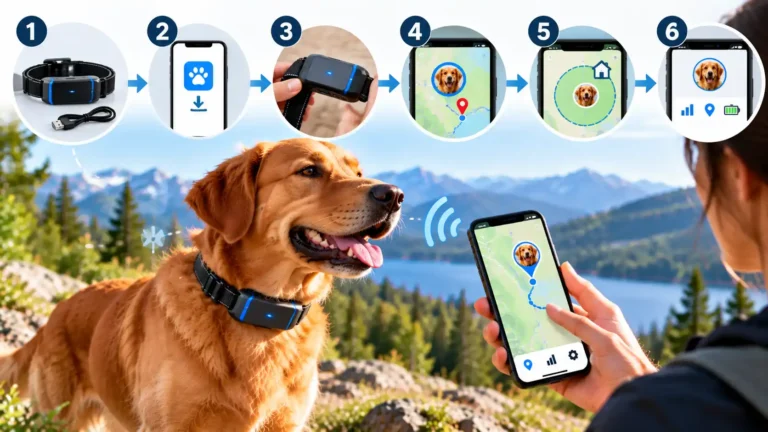
GPS dog trackers combine satellite positioning, electronic processing, communication technology, and mapping software to help owners monitor their dogs’ locations. Although the exact process varies by device, most GPS trackers follow a similar sequence: determine the device’s position, process the location data, transmit the information through a supported communication system, and display the reported location in an app or tracking interface.
Understanding each step makes it easier to see how a small device attached to a dog’s collar can provide useful location information over a potentially large area.
Step 1 — GPS Satellites Help Determine Location
The tracking process begins with signals from satellites in the Global Positioning System (GPS). These satellites orbit Earth and continuously broadcast signals containing information about their position and the time the signals were transmitted.
A GPS receiver inside the dog’s tracking device picks up signals from multiple satellites. By measuring how long the signals take to arrive and using the satellites’ known positions, the receiver calculates its approximate geographical location.
This process is called satellite positioning. The resulting location is typically expressed as latitude and longitude, which identify a position on Earth’s surface.
For example, when a dog wearing a GPS tracker walks away from its owner, the receiver can use satellite signals to estimate the tracker’s new position. The satellites do not directly track the dog or send its location to the owner’s phone. Instead, they provide the signals the receiver needs to calculate its position.
The accuracy of this calculation depends on factors such as satellite visibility, signal quality, surrounding buildings, and dense vegetation. If the tracker cannot receive suitable satellite signals, it may take longer to establish a location or produce a less accurate result.
Step 2 — The Tracker Processes Location Data
Once the GPS receiver has calculated its position, the device processes the information so it can be used by the tracking system.
The location data typically includes geographical coordinates and may include a timestamp or other information about the measurement. Depending on the device, the tracker may also use internal sensors or software to support additional functions.
The tracker then prepares the information for storage or transmission. Some devices record location information at regular intervals, while others adjust how frequently they calculate or report their positions according to their settings and operating mode.
For example, a tracker might record a dog’s location during a walk and prepare the latest coordinates to be sent to the owner’s smartphone app. The exact timing depends on the device’s tracking settings and capabilities.
It is important to understand that calculating coordinates and communicating them are separate processes. A tracker may successfully determine its location even when it cannot immediately send that information to the owner.
Step 3 — The Tracker Sends Location Information
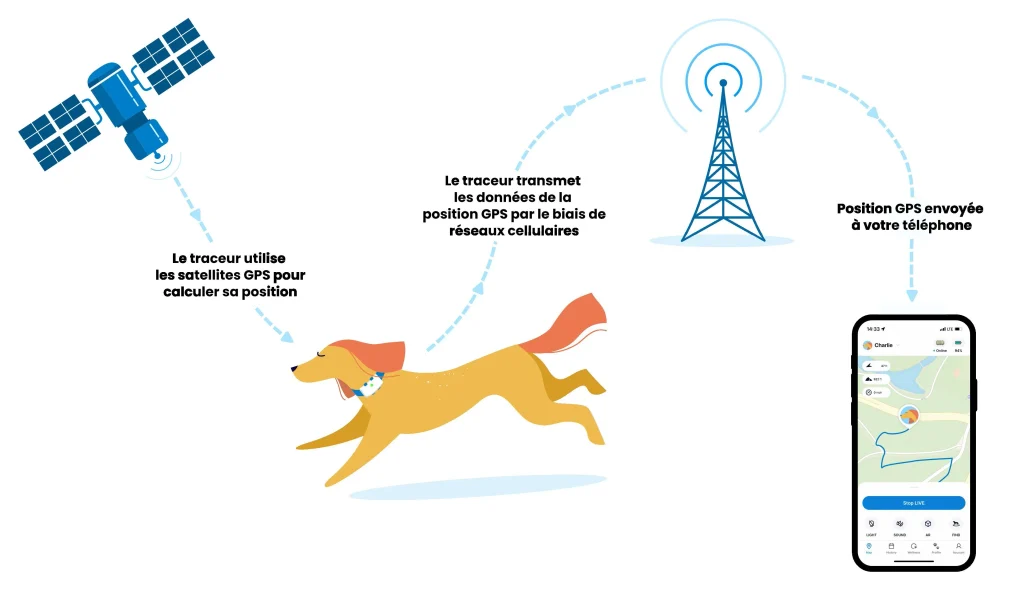
After determining its location, the tracker needs a way to communicate that information to the owner or a compatible receiver. Many GPS dog trackers use cellular connectivity for this purpose.
In a cellular-enabled system, the tracker sends its location data over a supported mobile network to an online service. The service then makes the information available to the owner’s tracking app.
This allows owners to check a dog’s reported location even when they are far away from the animal, provided the tracker has the required connectivity and service.
However, not every GPS tracker uses the same communication method. Depending on the design, a device may use another supported network or communicate with a dedicated receiver. Some specialized systems can operate without relying on conventional cellular coverage.
Several factors can affect the transmission process:
- Cellular coverage: A cellular-dependent tracker may struggle to send updates in areas with weak or unavailable mobile service.
- Device battery: A depleted battery can prevent the tracker from continuing to report its location.
- Communication settings: Update intervals and power-saving modes can affect when location data is transmitted.
- Network conditions: Temporary communication problems can delay information from reaching the tracking service.
This explains why a tracker may know its own location but still fail to display a fresh update in the owner’s app.
Step 4 — The Tracking App Displays the Location
Once the location information reaches the tracking service, the owner’s smartphone app can display the reported position on a digital map.
The app translates the geographical coordinates into a visual location that is easier to understand. Depending on the system, the map may also show the dog’s previous positions, movement history, or notifications associated with a designated area.
For example, if a dog moves from the backyard toward a nearby street, the tracking app may show the reported position of its collar on the map. The owner can use that information to understand where the dog was last detected and decide where to begin searching.
The app’s display is only as current as the information it receives. If the tracker loses its connection or stops transmitting, the map may continue to show the last location reported by the device.
Owners should therefore check the timestamp, connection status, and any location-update indicators available in the app rather than assuming that every displayed position represents the dog’s exact current location.
Step 5 — Location Updates Continue
Many GPS dog trackers are designed to report location information repeatedly, allowing owners to follow a dog’s movements over time. However, the frequency of these updates varies between devices and may depend on the selected tracking mode.
Some trackers provide frequent updates, while others report their positions at longer intervals to conserve battery power. Certain models may offer different operating modes, allowing users to adjust the balance between location-update frequency and battery life.
Several factors influence how often new information becomes available:
- Tracking interval: How frequently the device calculates or reports its location.
- Power-saving settings: Features that reduce energy consumption may affect update frequency.
- Connectivity: Weak or unavailable communication networks can delay transmission.
- Battery condition: Low power may affect tracking performance or prevent further updates.
There is also an important distinction between a current location and a last-known location.
A current location is a recently reported position that the tracking system presents as current according to its update process. A last-known location is the most recent position received before the tracker stopped providing new information.
For instance, if a dog enters an area without cellular coverage, its tracker may continue calculating its position but be unable to transmit the updates. The owner’s app may show the last reported location until communication resumes or another supported tracking method becomes available.
A Realistic Example: How a GPS Dog Tracker Helps Locate a Wandering Dog
Imagine taking your dog to a large park for an afternoon walk. While exploring, the dog wanders farther away and disappears behind a line of trees.
Here is how a GPS dog tracker may help:
- The tracker determines its position. Its GPS receiver uses satellite signals to calculate the collar’s geographical coordinates.
- The device processes the coordinates. It prepares the location information for reporting.
- The tracker transmits the information. If the device has a working communication connection, it sends the data to its tracking service.
- The app displays the reported position. You open the app and see where the tracker last reported the dog’s location.
- Further updates help you follow the movement. If the tracker continues transmitting new locations, you may be able to follow the dog’s changing position as you search.
The result depends on the conditions. If the dog moves into an area with poor connectivity, the app may not receive updates immediately. If the battery runs out, the device may stop reporting altogether.
A GPS dog tracker can therefore provide useful information during a search, but it does not guarantee that a missing dog will be found. Supervision, secure equipment, identification tags, and an up-to-date microchip registration remain important parts of responsible pet care.
What Technology Do GPS Dog Trackers Use?
GPS dog trackers rely on a combination of technologies to determine a dog’s location and make that information available to its owner. The Global Positioning System (GPS) helps calculate geographical position, while cellular networks and other communication methods can transmit location data to a smartphone app or compatible receiver.
Some tracking devices also use Wi-Fi, Bluetooth, or radio-frequency communication for additional functions. However, these technologies serve different purposes, and not every GPS dog tracker includes all of them. Understanding how each technology works helps explain why tracking range, accuracy, and connectivity vary between devices.
Global Positioning System (GPS)
The Global Positioning System (GPS) is a satellite-based navigation system that allows compatible receivers to calculate their geographical positions. GPS satellites continuously broadcast signals containing information about their positions and the times the signals were transmitted.
A GPS receiver inside a dog tracker detects signals from multiple satellites and measures their arrival times. By comparing this information with the satellites’ known positions, the receiver calculates its approximate location on Earth.
The resulting position is generally expressed as latitude and longitude, which can be used to place the tracker on a digital map.
For example, when a dog wearing a GPS tracker moves across a park, the device can use satellite signals to estimate the collar’s changing position. As the dog moves, the tracker can calculate updated coordinates when suitable satellite signals are available.
GPS positioning does not require a cellular connection. However, a tracker generally needs an additional communication method to send its calculated location to an owner who is somewhere else.
GPS accuracy can also vary depending on satellite visibility, nearby buildings, dense vegetation, terrain, and the quality of the receiver. These factors can affect how accurately the device estimates its position.
Cellular Networks
Cellular networks allow compatible GPS dog trackers to transmit location information over distances much greater than the direct communication range of a typical Bluetooth connection.
Many GPS dog trackers contain a cellular modem and use a supported mobile network to send their location data to an online service. A smartphone app then retrieves the information and displays the reported position on a map.
For example, if a dog wanders away from its owner during a neighborhood walk, a cellular-enabled GPS tracker may send updated coordinates to the owner’s app even when the dog is several blocks away.
The system depends on several factors, including mobile network coverage, the tracker’s supported cellular technology, battery power, and any required subscription or service plan.
If the dog enters an area without suitable cellular coverage, the tracker may continue calculating its GPS position but be unable to transmit new updates through that network. Depending on the device, location information may be stored temporarily, transmitted later, or remain unavailable to the remote app.
The key distinction is that GPS determines the location, while the cellular network carries that information to the tracking service.
Not every GPS dog tracker relies on cellular connectivity. Some use other communication systems or dedicated receivers, so the exact requirements depend on the device’s design.
Wi-Fi and Bluetooth
Wi-Fi and Bluetooth are wireless technologies that some dog-tracking devices use to support additional functions. Their roles differ from satellite-based GPS positioning, although certain devices combine several technologies in one system.
Wi-Fi technology
Some devices use nearby Wi-Fi networks to assist with location estimation, improve positioning in suitable environments, or communicate with other connected systems. Wi-Fi positioning can use information about nearby wireless access points, depending on the device and service.
Wi-Fi can also support setup or communication with compatible equipment. However, a basic Wi-Fi connection does not automatically provide continuous remote tracking, and its capabilities depend on the device.
Bluetooth technology
Bluetooth enables short-range wireless communication between compatible devices. In pet tracking, it may help an owner detect a nearby tracker, pair a device with a smartphone, or use a supported finding network.
For example, if a dog is hiding somewhere nearby, a Bluetooth-based pet-finding device may help the owner detect its signal within the available range.
Some Bluetooth finding systems also rely on compatible phones or other devices to report a tag’s detected location. In those cases, the reported position depends on the finding network and when the tag was detected.
A basic Bluetooth tracker does not independently provide the same remote GPS tracking capability as a GPS device with an appropriate communication system.
Wi-Fi and Bluetooth may complement GPS, but they are not required in every dog tracker. Their availability and functions depend on the model.
Radio-Frequency Communication
Radio-frequency (RF) communication uses radio waves to transmit signals between electronic devices. Some specialized dog-tracking systems use a transmitter attached to a dog’s collar and a compatible handheld receiver carried by the owner.
The receiver detects the transmitted signal and may help the owner determine the direction or approximate distance of the dog. This can be useful for certain working dogs, hunting activities, and outdoor environments where cellular coverage is limited.
Unlike a GPS tracker, a conventional RF tracking system does not necessarily calculate geographical coordinates using satellites. Instead, it relies on detecting and interpreting the radio signal received from the transmitting device.
The practical range depends on factors such as transmitter power, receiver sensitivity, terrain, obstructions, and the specific equipment being used.
Some specialized tracking products combine GPS positioning with radio communication, so it is important to check how a particular system operates rather than assuming all RF devices work the same way.
How These Technologies Work Together
The following table summarizes the main differences between the technologies used in or alongside dog-tracking systems.
| Technology | Primary function | Common limitation |
|---|---|---|
| GPS | Calculates geographical position using satellite signals | Positioning can be affected by signal conditions and obstructions |
| Cellular networks | Transmit location information to a remote service or app | Requires compatible network coverage and service |
| Wi-Fi | May support supplementary positioning, setup, or communication | Depends on available networks and device capabilities |
| Bluetooth | Supports nearby detection, pairing, or compatible finding networks | Direct detection is generally short-range |
| Radio frequency | Transmits signals to a compatible receiver for tracking | Range and performance depend on equipment and surroundings |
A GPS dog tracker may combine satellite positioning with cellular communication and supplementary wireless technologies. Another tracking device may use only one or two of these methods, depending on its purpose.
Understanding these differences explains why some trackers can report a dog’s location over a wide area, while others are better suited to finding a nearby pet or tracking a dog with a dedicated receiver. The technology determines what information is available, how it is communicated, and which environmental conditions may affect its reliability.
What Is the Difference Between GPS Positioning and Live Tracking?
GPS positioning and live tracking are closely related, but they serve different purposes. GPS positioning determines where a dog is located, while live tracking involves communicating that location to an owner through a compatible app, handheld receiver, or tracking service.
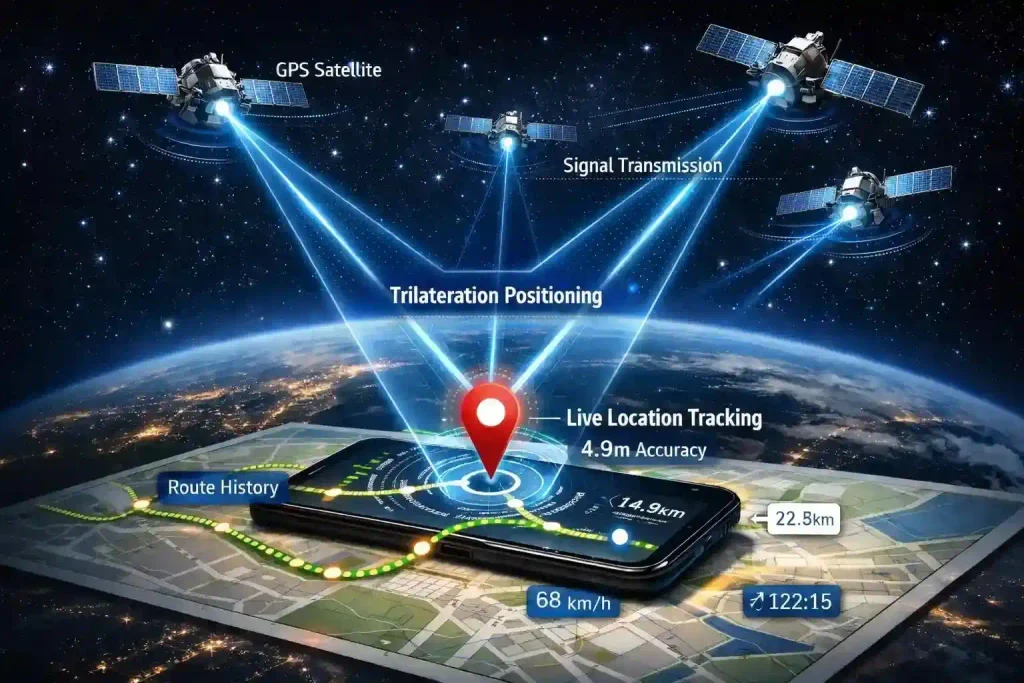
Understanding this difference helps explain why a GPS dog tracker may know a dog’s position without immediately displaying it on the owner’s smartphone.
GPS Location Calculation
GPS positioning relies on signals transmitted by satellites orbiting Earth. A GPS receiver inside the dog’s tracker uses signals from multiple satellites to estimate the device’s location, usually expressed as latitude and longitude.
This process does not require a cellular connection or an internet connection. The tracker can calculate its position as long as it receives suitable satellite signals.
However, calculating coordinates is only the first step. GPS satellites do not automatically send the dog’s location to the owner’s phone. The tracker needs a separate communication method to deliver that information.
Communication Between the Tracker and Its Service or Receiver
After calculating its position, the tracker must transmit the location data so the owner can access it. The communication method depends on the device’s design.
For example, a cellular GPS dog tracker may send coordinates over a mobile network to an online service, which then makes the information available in a smartphone app. Other systems may use a dedicated handheld receiver, radio-frequency communication, or another supported connection.
If the tracker cannot communicate with its receiver or service, the owner may not receive an updated location even when the device can still calculate its position.
What Does Live or Near-Real-Time Tracking Mean?
Live tracking generally means that a dog’s location is updated frequently enough to help the owner follow its movements. However, the term does not necessarily mean the location is refreshed continuously or without any delay.
The time between updates depends on factors such as the tracker’s settings, reporting interval, battery level, network coverage, and satellite reception. Some devices send updates at short intervals, while others report less frequently to conserve battery power.
For example, if a dog runs across a park, the app may show a series of updated positions as the tracker sends new coordinates. The owner can use these updates to understand the dog’s direction and recent movements. A short delay may still occur between the dog’s actual position and the location shown on the screen.
Why Do Some Trackers Display a Last-Known Location?
A last-known location is the most recent position successfully recorded or received by the tracking system. It is not necessarily the dog’s current location.
A tracker may continue calculating GPS coordinates but fail to transmit them because of poor cellular coverage, a communication problem, or a service interruption. Satellite reception may also become unreliable in certain environments, such as indoors or among tall buildings and dense tree cover.
When fresh location data is unavailable, an app may retain the last successfully received position. Depending on the device, it may also show when that position was recorded or received.
Owners should check the timestamp and any connection-status indicators before relying on the displayed location. If the information is several minutes old, the dog may have moved considerably since the last update.
GPS Positioning vs. Live Tracking: Key Differences
| Feature | GPS Positioning | Live Tracking |
|---|---|---|
| Main purpose | Calculates the tracker’s location | Delivers location updates to the owner |
| Technology required | GPS receiver and suitable satellite signals | GPS or another positioning method, plus a communication system |
| Internet or cellular connection | Not required for GPS calculations | May be required, depending on the tracking system |
| Location updates | Determines the device’s position when a fix is available | Displays new positions as updates are received |
| Common limitation | Poor satellite reception can reduce accuracy | Network problems, reporting intervals, or service interruptions can delay updates |
| Information displayed | Coordinates calculated by the tracker | Current or most recently received location, depending on data availability |
The key distinction: GPS positioning tells the tracker where it is, while live tracking helps deliver that information to the owner. A GPS dog tracker can calculate a location without successfully transmitting it, and a smartphone app may display a last-known position when a fresh update is unavailable.
What Affects the Accuracy of GPS Dog Trackers?
The accuracy of a GPS dog tracker depends on several factors, including satellite signal quality, the surrounding environment, communication coverage, and the device’s settings. Even when a tracker uses GPS technology, the location shown in a smartphone app may not always match the dog’s exact position at that moment.
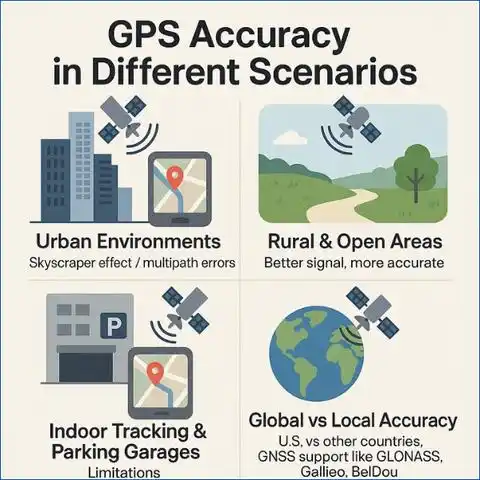
It is also important to distinguish between inaccurate positioning and a failure to transmit location information. Inaccurate positioning occurs when the tracker calculates an incorrect or less precise location. A transmission failure occurs when the tracker cannot successfully deliver its location data to the owner. These problems can affect tracking in different ways.
Satellite Signal Availability
GPS dog trackers rely on signals from satellites orbiting Earth to calculate their position. The receiver generally needs signals from multiple satellites to determine its location. The quality and availability of these signals can influence the accuracy of the calculated coordinates.
When the tracker receives clear signals from several satellites, it can generally estimate its position more reliably. If satellite signals are weak, obstructed, or available from only a limited number of satellites, the device may take longer to establish a position or produce a less accurate result.
Signal availability can change as a dog moves through different environments. A tracker may work well in an open field but struggle when the dog enters a covered area or moves between tall buildings.
Buildings, Trees, and Dense Vegetation
Physical obstacles can interfere with GPS satellite signals. Tall buildings, thick tree canopies, dense vegetation, and covered structures may weaken or obstruct the signals reaching the tracker.
Urban environments can present additional challenges. Signals may reflect off buildings before reaching the receiver, a phenomenon known as multipath interference. These reflected signals can affect the accuracy of the calculated position.
Trees and vegetation can also reduce signal quality, particularly in wooded areas with dense overhead cover. The effect varies according to the thickness of the obstruction, the tracker’s position, and the surrounding conditions.
For example, a dog running through an open park may be tracked more accurately than a dog moving through a narrow street surrounded by tall buildings. The difference does not necessarily indicate that either device is faulty; the environment may be affecting satellite reception.
Terrain and Environmental Conditions
The surrounding terrain can influence how easily a GPS tracker receives satellite signals. Open, relatively flat areas generally provide better opportunities for unobstructed reception than locations surrounded by steep hills, mountains, or deep valleys.
In mountainous regions, terrain may block signals from parts of the sky, making it harder for the receiver to obtain a reliable position. Similar difficulties can occur when a dog moves into a ravine or an area with substantial natural obstructions.
Weather should also be considered, although ordinary weather conditions are not usually the main limitation for GPS reception. Heavy foliage, physical obstructions, and the receiver’s view of the sky are often more significant factors. Severe atmospheric conditions can influence satellite signals, but their effects vary.
As a result, a tracker that performs well in one location may deliver less consistent results in another. Location accuracy should be understood as something that can change with the environment rather than a fixed level of performance.
Cellular Network Coverage
Cellular network coverage affects how some GPS dog trackers transmit location information to a smartphone app. It does not directly determine the accuracy of the GPS coordinates calculated by the receiver.
For example, a tracker may successfully calculate its position in a remote rural area but be unable to send the coordinates because a compatible cellular network is unavailable. The owner’s app may then continue displaying the last location it received rather than the dog’s current position.
When the tracker regains network connectivity, it may resume sending updates, depending on the device’s design and settings. Whether it stores and later transmits missed location records varies by model.
Not every dog tracker relies on cellular communication. Some use radio-frequency systems or dedicated receivers, so their communication range and limitations differ.
This distinction is important: a tracker can have good GPS reception but poor communication coverage. In that situation, the problem is not necessarily inaccurate positioning; it is the failure to deliver fresh location data.
Tracking Update Frequency
Tracking update frequency determines how often a device records or sends a new location. It can affect how closely the location displayed in an app reflects the dog’s current movements.
Some trackers provide frequent updates, while others send location information at longer intervals to reduce power consumption or limit data usage. The selected tracking mode may also change how frequently the device reports its position.
Consider a dog moving along a trail. If the tracker sends an update every few seconds, the app can provide a more detailed picture of the dog’s route. If updates arrive every few minutes, the displayed position may lag behind the dog’s actual movements.
A location can therefore be geographically accurate for the time it was recorded but no longer represent the dog’s present position. This is a delay in freshness rather than necessarily an error in GPS positioning.
When interpreting a location, owners should consider both the reported coordinates and the timestamp of the latest update.
Battery Level and Device Settings
Battery level and device settings can also influence tracking performance. Many GPS dog trackers use power-saving features to extend battery life, such as reducing the frequency of location reports or limiting certain tracking functions when the device is inactive.
Depending on the model, a low battery may trigger a power-saving mode, reduce the frequency of updates, or eventually cause the tracker to stop operating. Settings such as tracking mode, reporting interval, and permitted background activity may also affect how frequently new locations become available.
A tracker with a low battery does not necessarily calculate less accurate GPS coordinates solely because the battery is low. The more likely issue is that the device may reduce its activity, fail to transmit updates reliably, or shut down when power is exhausted.
Owners should follow the manufacturer’s charging recommendations and review the device’s tracking settings. They should also check whether the tracker is powered on, connected to its service or receiver, and reporting recent location data.
Inaccurate Positioning vs. Failure to Transmit Location Information
Although these problems can produce similar experiences in a tracking app, they have different causes.
| Issue | What Happens | Possible Cause | What the Owner May See |
|---|---|---|---|
| Inaccurate positioning | The tracker calculates a location that differs from the dog’s actual position | Weak satellite signals, obstructions, or reflected signals | The location marker appears in the wrong place or shifts unexpectedly |
| Failure to transmit | The tracker cannot deliver a new location to the app or receiver | Poor cellular coverage, communication interruption, or service problems | The app shows an old location or reports that the tracker is offline |
| Delayed updates | New positions arrive less frequently than expected | Update intervals, power-saving settings, or temporary connectivity issues | The marker appears to lag behind the dog’s movements |
| Loss of tracking due to power | The device stops providing new location information | Depleted battery or the device being switched off | The location stops updating, potentially leaving only the last-known position |
Understanding these differences helps owners interpret tracking information more carefully. If the displayed marker seems misplaced, satellite reception or environmental interference may be responsible. If the marker has not changed and its timestamp is old, a communication problem, an update interval, or a power issue may be more likely.
The key takeaway: GPS accuracy describes how closely the calculated position matches the tracker’s actual location, while tracking reliability also depends on whether fresh location data reaches the owner. A useful tracking system needs both reliable positioning and a dependable way to communicate updates.
Can GPS Dog Trackers Work Without Cellular Network Coverage?
Yes, some GPS dog trackers can calculate a dog’s location without cellular network coverage. However, whether the owner can view that location remotely depends on how the tracker transmits its data. A device that relies on cellular networks may continue receiving GPS signals but be unable to send updated coordinates to its smartphone app when mobile coverage is unavailable.
Understanding the difference between location calculation and data transmission is essential when evaluating how a tracker performs in rural areas, forests, mountains, or other locations with limited network access.
How GPS Works Without Cellular Coverage
GPS receivers determine their position by processing signals from satellites orbiting Earth. This process does not require a cellular network or an internet connection.
As long as the tracker receives suitable satellite signals, it may still calculate its location even when the dog is outside mobile coverage. However, calculating coordinates does not automatically make those coordinates available to the owner.
For a cellular-dependent tracker, the device normally needs a compatible mobile network to transmit location information to its tracking service. If that connection is unavailable, the app may stop receiving fresh updates and continue displaying the last-known location.
For example, if a dog moves into a remote woodland area without cellular coverage, its tracker might continue calculating GPS coordinates. However, the owner may not be able to follow the dog’s movements through the app until communication is restored.
Can Trackers Store Location Data Without Network Coverage?
Some GPS dog trackers can store location records internally when they cannot transmit them immediately. Depending on the model, the device may save coordinates and timestamps for later access or transmission.
Once connectivity returns, a compatible tracker may upload stored records to its service. This can help preserve information about the dog’s route during periods without coverage.
However, data storage is not the same as live tracking. Even if a device records the dog’s movements while offline, the owner may not be able to see those movements in real time. Not all trackers offer offline storage, and the amount of information retained and how it can be accessed vary by device.
Before relying on this feature, check the manufacturer’s specifications to confirm whether the tracker supports offline location recording and what happens to stored data when the network connection returns.
Alternative Communication Systems
Some dog tracking systems use communication methods other than cellular networks. These alternatives can provide location information in environments where mobile coverage is limited or unavailable, but their capabilities depend on the equipment and system design.
- Dedicated handheld receivers: Some GPS tracking systems transmit location data directly to a compatible handheld receiver. The owner may be able to view the dog’s position without relying on a cellular network, provided the tracker and receiver can communicate.
- Radio-frequency communication: Certain tracking devices use radio signals to help owners locate dogs within the system’s effective range. Depending on the design, they may indicate direction or approximate distance rather than provide GPS coordinates on a smartphone map.
- Satellite communication: Some specialized devices use satellite communication to send data from areas without cellular coverage. This capability is not available on every GPS dog tracker and may involve specific service requirements.
- Hybrid tracking systems: Some devices combine GPS positioning with more than one communication method. The available tracking functions depend on which connections the system supports and whether the required equipment is available.
These approaches are not interchangeable. A GPS tracker with a dedicated receiver, for example, may work differently from a cellular tracker that uses an app and online service. Owners should confirm the communication method rather than assuming that all GPS devices operate independently of mobile networks.
What to Check Before Using a Tracker in Remote Areas
If you plan to track a dog in an area with unreliable cellular coverage, review the device’s specifications carefully. Look for clear information about:
- Whether the tracker requires a cellular connection for remote location updates.
- Whether it supports offline location recording and later data synchronization.
- Whether it works with a dedicated handheld receiver outside cellular coverage.
- Whether satellite communication is supported, if applicable.
- The communication range and environmental limitations of any alternative system.
- Whether additional equipment, a subscription, or a specific service is required.
Pay attention to the distinction between GPS coverage and communication coverage. GPS satellites may be available in a location where cellular service is not, but that does not guarantee that a tracker can deliver its coordinates to a remote smartphone.
The key takeaway: A GPS dog tracker may calculate a dog’s position without cellular coverage, but remote tracking requires a suitable way to transmit that information. Unless the manufacturer’s specifications confirm offline access, a dedicated receiver, satellite communication, or another appropriate alternative, do not assume the tracker will provide remote updates outside cellular coverage.
What Information Can a GPS Dog Tracker Provide?
A GPS dog tracker can provide information about a dog’s location and, in some cases, its movements, activity, and device status. The information available depends on the tracker’s hardware, software, communication system, and supported features.
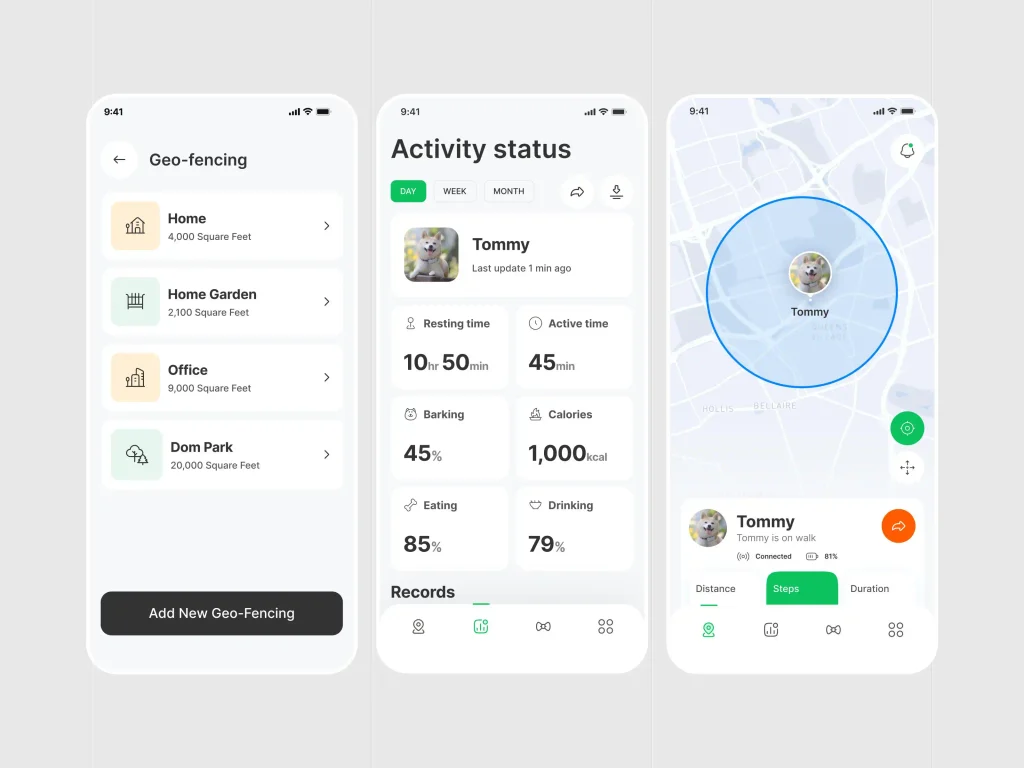
Some devices focus primarily on location tracking, while others offer additional functions through a smartphone app or dedicated receiver. Understanding these features helps explain what owners can learn from a tracking system and which information may not be available on every device.
Current or Last-Known Location
One of the main functions of a GPS dog tracker is to show the dog’s current or most recently reported location. Depending on the device, this information may appear on a map in a smartphone app or on a compatible handheld receiver.
When the tracker calculates its position and successfully transmits an update, the owner can view the reported location. Frequent updates can help owners follow a dog’s movements, although the displayed position may not be perfectly current because of reporting intervals or communication delays.
If the tracker cannot obtain a reliable position or transmit fresh information, the system may display the last-known location instead. This is the most recent position successfully recorded or received, not necessarily the dog’s present location.
Owners should check the timestamp and connection status when interpreting location information. A location marker without a recent update should not automatically be treated as the dog’s exact current position.
Location History
Some GPS dog trackers record location history, allowing owners to review where a dog has traveled over a period of time. Depending on the system, this information may be presented as a map, a route, or a sequence of recorded locations.
Location history can help owners understand a dog’s usual walking routes, identify places it frequently visits, or review its movements after an outing. For example, an owner may use recorded route information to see which paths a dog followed during a walk.
The amount of history available varies by device and service. Some systems retain records for a limited period, while others may offer different storage options. Recording frequency, connectivity, and data-retention settings can also affect how complete the route appears.
Location history should not be confused with continuous recording. If a tracker records positions at intervals, the saved route may show approximate movement between recorded points rather than every step the dog takes.
Virtual Boundaries and Geofencing Alerts
Some GPS tracking systems support geofencing, a feature that lets owners define a virtual boundary around a particular area. This area might represent a yard, a home, or another location where the owner expects the dog to remain.
When the system detects that the dog has crossed the configured boundary, it may send an alert to the owner’s smartphone or another connected device. Some systems can also notify the owner when the dog enters a designated area.
Geofencing can provide an additional way to monitor a dog’s movements, but it has limitations. Alert timing may depend on location-update frequency, communication availability, device settings, and the accuracy of the reported position. A delayed update can mean that a notification arrives after the dog has already crossed the boundary.
Owners should also check whether geofencing requires cellular coverage, an active service, or particular app permissions. The feature is not available on every GPS dog tracker.
Movement and Activity Monitoring
Certain GPS dog trackers include activity-monitoring functions alongside location tracking. Depending on the device, these features may record movement, estimate activity levels, or summarize patterns over time.
For example, an app might display an activity summary for a day or help an owner compare movement patterns across several days. Such information can provide general insight into a dog’s routine and how its activity changes over time.
However, activity monitoring and GPS tracking measure different things. GPS data helps estimate the device’s location, while activity features may rely on motion sensors, software calculations, or other device-specific methods.
Activity estimates should be interpreted within the limits of the system. They do not necessarily provide a complete picture of a dog’s health, fitness, or well-being, and a change in recorded activity does not by itself establish a medical problem.
Not every location tracker includes activity monitoring, and the type and detail of available information vary by model.
Battery and Connectivity Status
Some GPS dog trackers provide device-status information to help owners understand whether the system is ready to operate. Depending on the model, the app or receiver may display the remaining battery level, charging status, network connection, or the time of the most recent location update.
Battery information can help owners plan when to recharge the device. Connectivity indicators may also help explain why a location has not changed or why fresh information is unavailable.
For example, if a tracker reports that its battery is low or its cellular connection is unavailable, the owner has a possible explanation for interrupted updates. However, a connectivity indicator does not necessarily identify the exact cause of every tracking problem.
The available status information depends on the tracker’s design and software. Some devices display several diagnostic details, while others provide only basic battery or connection indicators.
Which Features Are Available on Every GPS Dog Tracker?
Not every GPS dog tracker provides all these functions. Basic models may focus on location reporting, while other systems offer additional features such as route history, geofencing, activity monitoring, and device-status information.
| Information or feature | What it can show | Availability |
|---|---|---|
| Current or last-known location | The most recently available position of the dog | Common in GPS tracking systems, subject to device capabilities |
| Location history | Previously recorded positions or routes | Available on some devices |
| Geofencing alerts | Notifications when a dog crosses a virtual boundary | Available on supported systems |
| Movement and activity monitoring | Estimated movement or activity patterns | Available on some models |
| Battery status | Remaining battery level or charging information | Depends on the device |
| Connectivity status | Network or receiver connection information and update status | Depends on the device and app |
Before relying on a particular function, check the manufacturer’s specifications and any service requirements. Some features may require a compatible smartphone app, an active subscription, cellular coverage, additional equipment, or specific device settings.
The key takeaway: GPS dog trackers can provide more than location information, but their capabilities differ. Always verify which features a particular device supports rather than assuming that every tracker includes location history, geofencing, activity monitoring, and connectivity diagnostics.
What Are the Benefits and Limitations of GPS Dog Tracking?
GPS dog tracking can help owners understand where their dogs are and provide useful information when a dog wanders away from a familiar area. Depending on the device, tracking systems may also record routes, support outdoor monitoring, and send alerts when a dog crosses a predefined boundary.
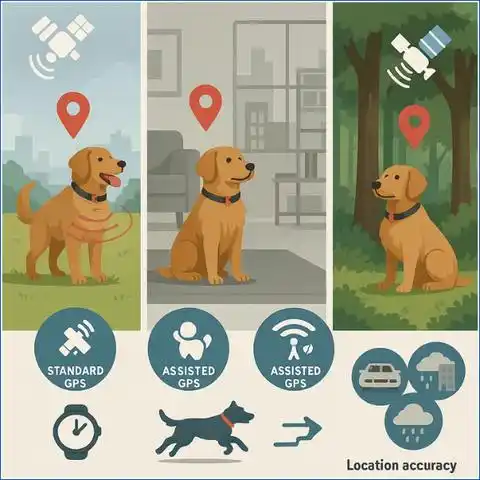
However, GPS tracking has practical limitations. Location accuracy can vary, communication networks may be unavailable, batteries need recharging, and some services require a subscription. Understanding both the benefits and limitations helps owners make informed decisions about how to use tracking technology responsibly.
Potential Benefits
1. Greater Location Awareness
One of the main benefits of a GPS dog tracker is the ability to view a dog’s reported location through a compatible smartphone app or handheld receiver. When the device is operating correctly and transmitting fresh updates, owners can check where their dog is without needing to remain within direct sight of it.
This can be particularly useful during walks, hikes, or visits to unfamiliar outdoor areas. Location information may help owners understand where their dog has moved and identify its approximate position when visual contact is lost.
The usefulness of this information depends on the tracker’s communication method, signal availability, and update frequency. A location displayed in an app may be delayed, so owners should check when the last update was received.
2. Support When Searching for a Missing Dog
A GPS dog tracker may provide valuable information if a dog escapes, wanders away, or becomes separated from its owner. Recent location updates can help narrow the search area and indicate the direction in which the dog may have traveled.
Some devices also provide location history, allowing owners to review previously recorded positions. This information can offer useful clues about the dog’s route, especially when the latest location update is no longer available.
However, tracking information should be treated as a guide rather than a guarantee. If the battery runs out, the device loses connectivity, or the dog moves beyond the system’s communication range, the owner may be left with only a last-known location. The dog may also move after that position was recorded.
GPS tracking can therefore support a search, but it does not replace practical steps such as contacting local animal shelters, notifying relevant authorities where appropriate, and asking nearby people to help look for the dog.
3. Outdoor Monitoring
GPS dog trackers can be useful for monitoring dogs during outdoor activities, particularly when exploring unfamiliar environments or traveling through large open areas.
Owners may use location updates to check a dog’s position during a hike, visit to a park, or other outing. Trackers that support geofencing may also provide alerts when a dog crosses a configured virtual boundary, subject to the device’s accuracy and communication capabilities.
These features can improve location awareness, but they should not be treated as a substitute for supervision. A GPS tracker does not physically prevent a dog from leaving a safe area, approaching a hazard, or entering an unsafe environment.
Owners should continue to use appropriate leads, secure fencing, recall training, and other safety measures suited to the dog and the surroundings.
4. Access to Movement Records
Some GPS dog tracking systems maintain location history, allowing owners to review previously recorded routes and movements. This can help them understand where a dog traveled during an outing or identify areas the dog frequently visits.
Depending on the device, owners may also be able to review movement patterns over time. Trackers with activity-monitoring features can provide additional estimates of daily movement or activity levels.
These records can offer useful context about a dog’s routine. However, the detail and reliability of the information depend on the recording interval, device capabilities, and data availability. Recorded routes may not capture every movement, and activity estimates do not provide a complete assessment of a dog’s health or well-being.
Important Limitations
1. Connectivity Interruptions
GPS positioning and location transmission are separate processes. A tracker may calculate its position using satellite signals but still be unable to send that information to the owner’s smartphone.
Cellular-dependent trackers can experience interruptions in areas with weak or unavailable mobile coverage. Other systems may depend on communication with a dedicated receiver or have their own effective range limitations.
When communication fails, an app may continue displaying the last-known location rather than the dog’s current position. Some devices store location records for later transmission, but this capability is not universal.
Owners should understand which communication system their tracker uses and how it behaves when a connection is lost.
2. Battery Life
GPS dog trackers require power to operate their positioning, communication, and other functions. Battery life varies by device and may be affected by tracking frequency, signal conditions, temperature, battery capacity, and enabled features.
Frequent location updates may consume more power than less frequent reporting or power-saving modes. Some devices adjust their behavior when the battery becomes low, potentially reducing update frequency or eventually stopping tracking altogether.
A depleted battery can leave the owner without fresh location information at the moment it is needed. Regular charging and checking the battery indicator before outdoor activities can help reduce this risk.
Owners should also remember that advertised battery life may differ from actual performance under everyday conditions.
3. Positioning Accuracy
GPS dog trackers do not always provide an exact position. Satellite signal quality, buildings, dense tree cover, terrain, and reflected signals can affect the accuracy of the coordinates calculated by the device.
The location displayed in an app may also be out of date if the tracker reports positions at intervals or cannot transmit new data promptly. This means a marker can be geographically accurate for the time it was recorded but no longer reflect the dog’s current position.
When interpreting tracking information, owners should consider both the reported location and the timestamp of the latest update. A GPS tracker can provide useful location estimates without guaranteeing pinpoint accuracy in every environment.
4. Subscription and Service Requirements
Some GPS dog trackers require a paid subscription or service plan to transmit location information through cellular networks and display updates in a smartphone app. The service may cover mobile connectivity, access to tracking features, or other functions provided by the manufacturer.
Other tracking systems may use different arrangements, such as a dedicated receiver or radio communication. Requirements therefore vary by device.
Before choosing a tracker, owners should check whether a subscription is required, which features it covers, whether additional equipment is needed, and what happens when a service plan expires. They should also confirm that the device’s communication technology is supported in the areas where they intend to use it.
5. Tracking Does Not Guarantee Recovery
Although GPS tracking can help owners search for a missing dog, it cannot guarantee that the dog will be found or recovered safely. The tracker may become detached, run out of battery, lose communication, or stop providing reliable location information.
Even when a current position is available, reaching the dog may take time. The animal may continue moving, enter inaccessible terrain, or travel into an area where approaching safely is difficult.
GPS tracking is therefore best understood as one part of a broader approach to dog safety. Secure identification, updated contact details, reliable fencing, recall training, suitable supervision, and appropriate leads or harnesses remain important.
A tracker can provide useful information, but responsible precautions are still necessary to reduce the risk of a dog becoming lost.
The key takeaway: GPS dog tracking can improve location awareness, support searches, and provide useful movement records. Its effectiveness depends on positioning accuracy, communication availability, battery life, and the features supported by the device. It is a helpful safety tool, not a guarantee of continuous tracking or successful recovery.
How Is GPS Dog Tracking Different From a Microchip?
GPS dog tracking and pet microchipping serve different purposes. A GPS dog tracker helps owners locate a dog’s reported position, while a standard pet identification microchip helps identify the animal if it is found and scanned.
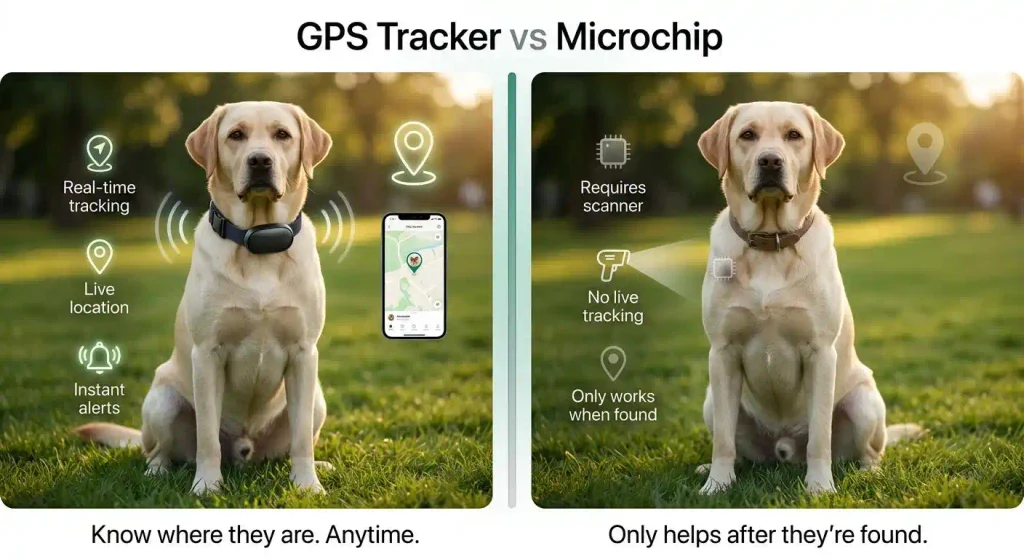
Although both technologies can contribute to a dog’s safety, they work in different ways. Understanding the distinction is important because a microchip does not independently provide real-time location information.
How GPS Dog Tracking Works
A GPS dog tracker is an electronic device typically attached to a dog’s collar or harness. It uses satellite signals or another supported positioning method to estimate the dog’s location. Depending on the device, it then transmits location information to a smartphone app or a dedicated receiver.
When the system is operating correctly, owners can check the dog’s reported position and, on supported devices, review location history or receive alerts when the dog crosses a virtual boundary.
However, tracking capabilities depend on the device’s positioning technology, communication method, battery level, and operating conditions. If the tracker loses power or cannot transmit new information, the owner may only have access to the last-known location.
How a Pet Identification Microchip Works
A standard pet identification microchip is a small electronic device implanted beneath the animal’s skin, usually in the area between the shoulder blades. It contains a unique identification number that can be read using a compatible microchip scanner.
When a lost dog is taken to a veterinary clinic, animal shelter, or another facility with a suitable scanner, staff can read the microchip number and use the relevant registration database to look up the registered owner’s contact information, provided the details are registered and up to date.
A standard pet identification microchip does not independently transmit GPS coordinates. It does not continuously track a dog’s movements or allow an owner to view the dog’s location on a map. Identification depends on the microchip being scanned and its number being associated with accessible registration information.
Keeping the registration details current is therefore an important part of making microchipping useful.
GPS Dog Tracker vs. Microchip: Key Differences
| Feature | GPS Dog Tracker | Standard Pet Identification Microchip |
|---|---|---|
| Main purpose | Helps locate a dog’s reported position | Helps identify a dog if it is found |
| How it works | Uses positioning technology and, where supported, a communication system | Stores a unique identification number that can be read by a compatible scanner |
| Typical placement | Attached to a collar or harness | Implanted beneath the skin |
| Live location tracking | Available on supported systems when positioning and communication are working | Not available |
| Smartphone location map | May be available through a compatible app | Does not provide a location map |
| Battery or power | Requires power to operate | A standard identification microchip does not require a conventional battery |
| How information is accessed | Through a compatible app, receiver, or tracking service | By scanning the microchip and checking its registration details |
| Main limitation | Tracking can be affected by battery life, positioning accuracy, and communication availability | The dog must generally be found and scanned for identification |
Should Dogs Have Both a GPS Tracker and a Microchip?
GPS tracking and microchipping can complement each other because they address different aspects of dog safety.
A GPS tracker may help an owner determine where a dog has wandered, while a registered microchip can help a veterinary clinic, shelter, or other authorized facility identify the dog if it is found. Neither method guarantees recovery, and each has limitations.
A tracker can become detached, lose power, or stop transmitting updates. A microchip cannot show where a dog is, and its usefulness depends on successful scanning and accurate registration details.
For these reasons, GPS tracking should not be treated as a replacement for microchipping. Owners can combine appropriate tracking technology with a secure collar, visible identification tag, current microchip registration, and responsible supervision.
The key takeaway: A GPS dog tracker provides location information, while a standard pet identification microchip provides an identification number. GPS tracking can help owners search for a missing dog, whereas microchipping can help someone identify the dog after it has been found and scanned.
How Should GPS Dog Trackers Be Used Safely?
GPS dog trackers can help owners monitor a dog’s reported location, but the device should be suitable for the animal and used correctly. Choosing an appropriate tracker, checking that it is securely attached, and understanding its limitations can help owners use the technology more effectively.
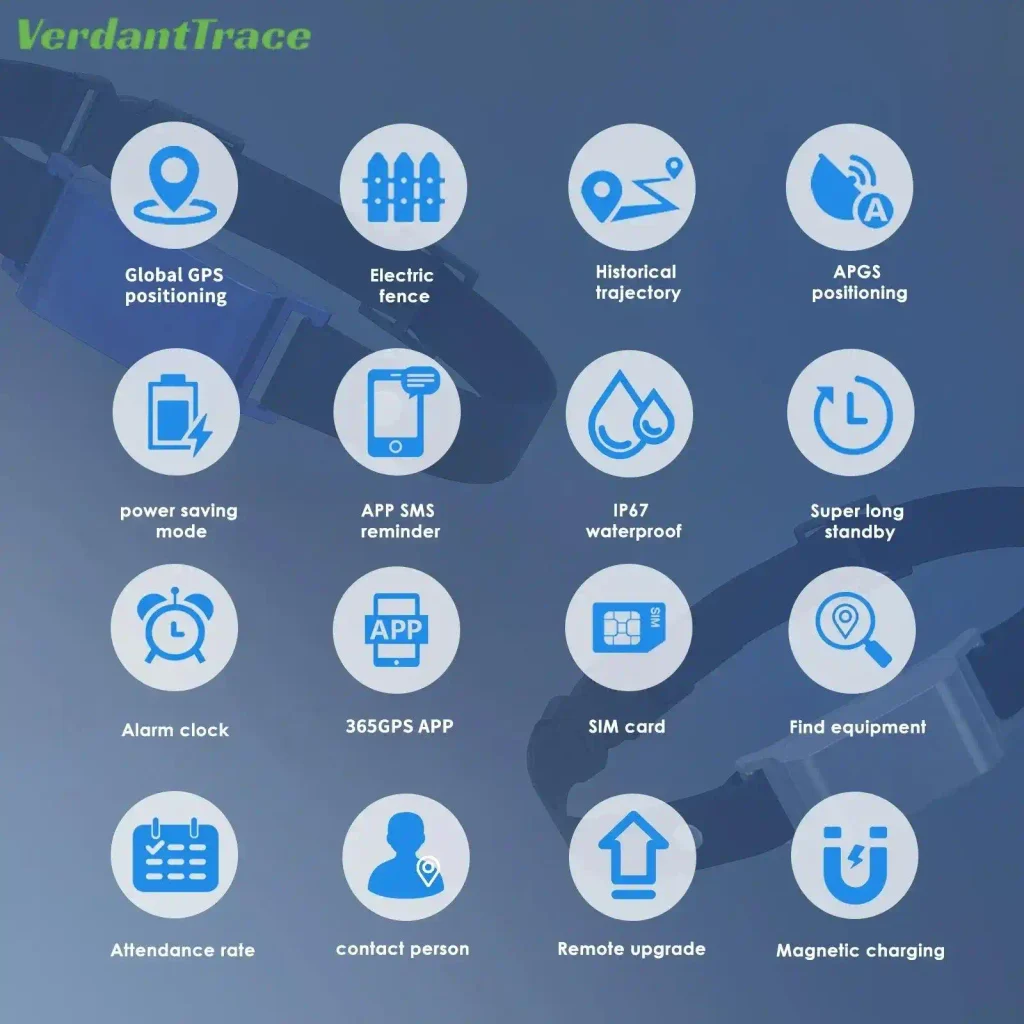
A GPS tracker should complement responsible supervision, suitable identification, and established precautions rather than replace them.
Choose a Suitable Size and Weight
Select a GPS dog tracker that is appropriate for your dog’s size, weight, and activity level. A device designed for a large dog may be too bulky for a smaller breed, while a compact tracker may have different battery or feature limitations.
Consider the dimensions of the device, its weight, how it sits on the collar or harness, and whether it could interfere with normal movement. Follow the manufacturer’s guidance on suitable dog sizes and compatible collars or harnesses.
The goal is to choose a device that can be worn comfortably during the activities for which it is intended. If the tracker appears too heavy, awkward, or restrictive, reassess its suitability before continued use.
Attach the Tracker Correctly to a Collar or Harness
Follow the manufacturer’s instructions when attaching the tracker. Use a compatible collar or harness and check that the mounting mechanism holds the device securely without creating loose parts or uncomfortable pressure.
The tracker should remain in its intended position during ordinary movement. A poorly attached device may shift, detach, or become caught on surrounding objects, depending on its design and the dog’s environment.
Before going outdoors, check that the attachment is secure and that the collar or harness fits appropriately. Inspect the mounting components periodically, particularly after active walks, running, or other activities that may loosen the attachment.
Check the Battery Charge and Connectivity
Before an outing, make sure the tracker has sufficient battery charge for the planned activity. Battery life varies by device and can be affected by update frequency, communication conditions, and enabled features.
If the tracker uses a smartphone app or online service, check that it is connected and displaying recent location information. For systems that use a dedicated receiver, confirm that the receiver and tracker are operating as expected.
Do not assume that a tracker is working simply because it is switched on. A low battery, interrupted connection, or outdated location report may prevent the owner from receiving useful updates.
Test the Tracking System Before Outdoor Activities
Familiarize yourself with the tracker’s functions before relying on it during a walk, hike, or visit to an unfamiliar area.
A practical pre-outing check includes:
- Confirming that the tracker is powered on and has sufficient battery charge.
- Checking that the app or receiver recognizes the device.
- Verifying that a recent location update is available.
- Reviewing how to access location history or alerts, if supported.
- Understanding how the device indicates lost connectivity or a last-known location.
If possible, test the system in a familiar outdoor environment where you can verify its reported position. Learn how frequently it updates and whether its operation depends on cellular coverage or a dedicated receiver.
A successful test in one location does not guarantee the same performance everywhere. Buildings, dense vegetation, terrain, and network coverage can affect tracking performance in other environments.
Inspect for Discomfort or Skin Irritation
Check your dog regularly while it wears the tracker, particularly when introducing a new device or changing its attachment. Look for signs that the collar, harness, or tracker is rubbing, pressing against the skin, or interfering with movement.
Pay attention to changes such as repeated scratching at the device, attempts to remove it, visible redness, or areas of irritation. These observations do not establish a particular medical cause, but they may indicate that the fit or placement needs attention.
If the device appears to cause discomfort, remove or adjust it as appropriate and review the manufacturer’s fitting instructions. Seek advice from a veterinarian if irritation persists or you are concerned about your dog’s skin or comfort.
Maintain Regular Supervision and Identification Measures
A GPS dog tracker is an additional monitoring tool, not a substitute for supervision or other identification measures. Even a functioning tracker may provide delayed updates, lose communication, run out of battery, or become detached.
Continue to use precautions appropriate to your dog’s behavior and surroundings. These may include a secure lead where needed, suitable fencing, recall training, and supervision in unfamiliar environments.
Keep your dog’s identification tag readable and its contact information current. A registered microchip can also help with identification if the dog is found and scanned. Remember that a standard pet identification microchip does not provide GPS location tracking.
Before traveling or visiting remote areas, consider whether the tracker’s communication system will work there. If it relies on cellular coverage, identify what happens when that coverage is unavailable and whether the device supports an alternative.
The key takeaway: Use a GPS dog tracker that suits your dog, attach it correctly, check its battery and connection, and test its functions before relying on it outdoors. Regular supervision and appropriate identification remain important because tracking technology cannot guarantee continuous location updates or the recovery of a missing dog.
Frequently Asked Questions About GPS Dog Trackers
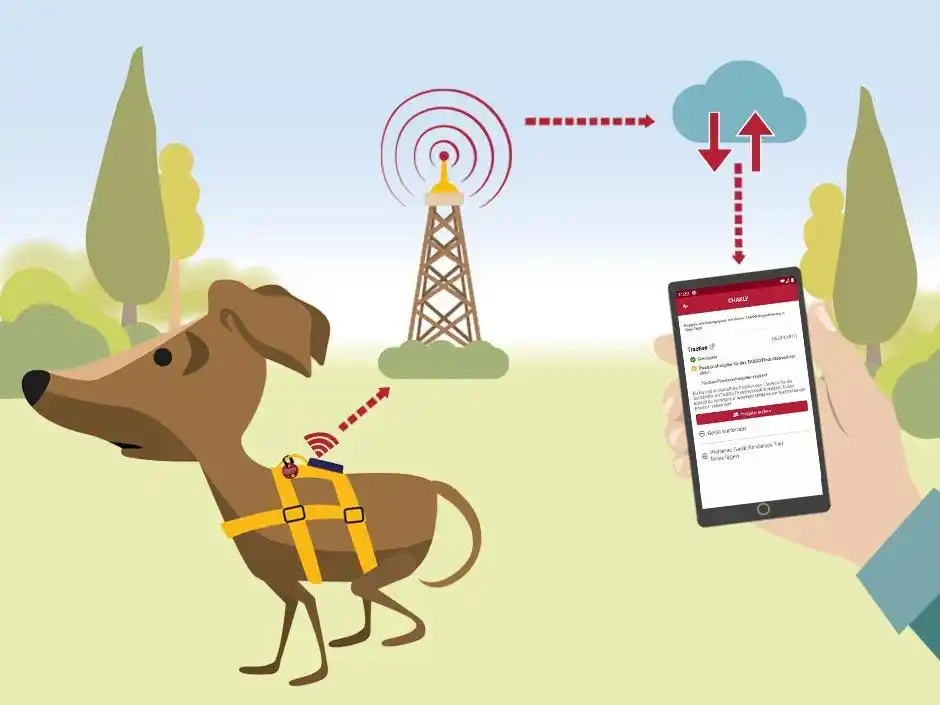
GPS dog trackers combine satellite positioning, communication technology, and tracking software to help owners monitor a dog’s reported location. The GPS receiver calculates the device’s position using satellite signals, while a supported communication system sends location information to a smartphone app or dedicated receiver. The app then displays available updates, allowing owners to follow the dog’s movements when the system is functioning correctly.
However, GPS positioning and live tracking are not the same. A tracker may calculate its location without being able to transmit that information to the owner. When fresh updates are unavailable, the app may display the last-known location rather than the dog’s current position.
The performance of a GPS dog tracker depends on several factors, including device design, satellite signal availability, communication coverage, battery condition, environmental obstructions, and tracking settings. Update frequency can also affect how closely the displayed location reflects the dog’s actual movements. Some systems offer additional functions, such as location history and geofencing alerts, but these features are not available on every device.
Understanding these principles helps clarify both the capabilities and limitations of GPS dog tracking. The technology can provide useful location information and support efforts to find a missing dog, but it cannot guarantee continuous updates, exact positioning in every environment, or successful recovery.
Ultimately, GPS dog tracking is best understood as one part of a broader approach to responsible dog ownership. Its value depends on how the technology works, the conditions in which it operates, and how accurately owners interpret the information it provides.