BESTDOGTRACKER.COM • COMPLETE BUYING GUIDE
Smart Dog Collars: Features, Benefits & How to Choose the Right One
A smart dog collar can help you locate a wandering dog, understand activity patterns, monitor selected wellness signals or support a training routine. But “smart collar” is a broad label: GPS trackers, health wearables, bark-control collars and remote training collars solve different problems. This guide explains the differences, compares options and shows what to check before you buy.
Explore: GPS tracking · Health and activity · Training · Bark control · Subscription costs · Safety

Smart dog collars at a glance
Choose by the job you need the device to do. A tracker that locates your dog is not automatically a health monitor, and a remote training collar is not a GPS safety device. This table groups the supplied products by their described purpose—not by independent test scores.
| Product | Category | Features described | Check before buying | Link |
|---|---|---|---|---|
| Purina Petivity GPS & Activity Tracker | GPS + activity | Live location with cellular coverage, movement tracking, personalized goals | Subscription and local network coverage | Amazon listing |
| PetPace V3.0 Health Monitor | Health + GPS | Vital-sign and activity data, health insights, telehealth features | Plan price, supported region, data limitations | Amazon listing |
| Bousnic 3300-ft Remote Training Collar | Remote training | Beep, vibration and static settings; dual channel; IP67 receiver | Fit, remote water resistance and humane training approach | Amazon listing |
| Two-Dog 3300-ft Training Collar | Training for two dogs | Dual channel, beep/vibration/static settings | Number of receivers included and exact model | Amazon listing |
| Delupet 2-in-1 Bark & Training Collar | Training + bark control | Remote modes, automatic bark detection, LED; claimed 4500-ft range | Mode behavior, fit and correction settings | Amazon listing |
| FAFAFROG Smart Bark Collar | Automatic bark control | Four modes, five sensitivity levels, rechargeable, IP67 claimed | Fit, age guidance and cause of barking | Amazon listing |
| AIKEEP 2-in-1 Training & Bark Collar | Training + bark control | Remote and automatic modes, dual channel, IP67 claimed | Safety lock, fit and method suitability | Amazon listing |
| AI Anti-Bark Collar with Dual Sensors | Automatic bark control | Sound and motion sensors, sensitivity levels, several response modes | Exact model, false triggers and safe use | Amazon listing |
Prices, stock, features and subscriptions can change. Manufacturer-stated remote ranges are not guaranteed real-world distances. Remote-control range is not GPS tracking range.
What is a smart dog collar?
A smart dog collar is a wearable device that uses sensors, wireless communication or an app to provide functions beyond a standard collar. Depending on the product, it may report a dog’s location, summarize movement and rest, measure selected physiological signals, define a virtual boundary or support a training routine.
There is no single feature set shared by every smart collar. Some are small tracking modules that attach to an existing collar or harness; others are complete collar systems with sensors, a receiver or a handheld remote. Start by identifying your main need: finding a dog, monitoring activity, observing wellness trends or addressing a training challenge.
Types of smart dog collars explained
GPS trackers and GPS collars
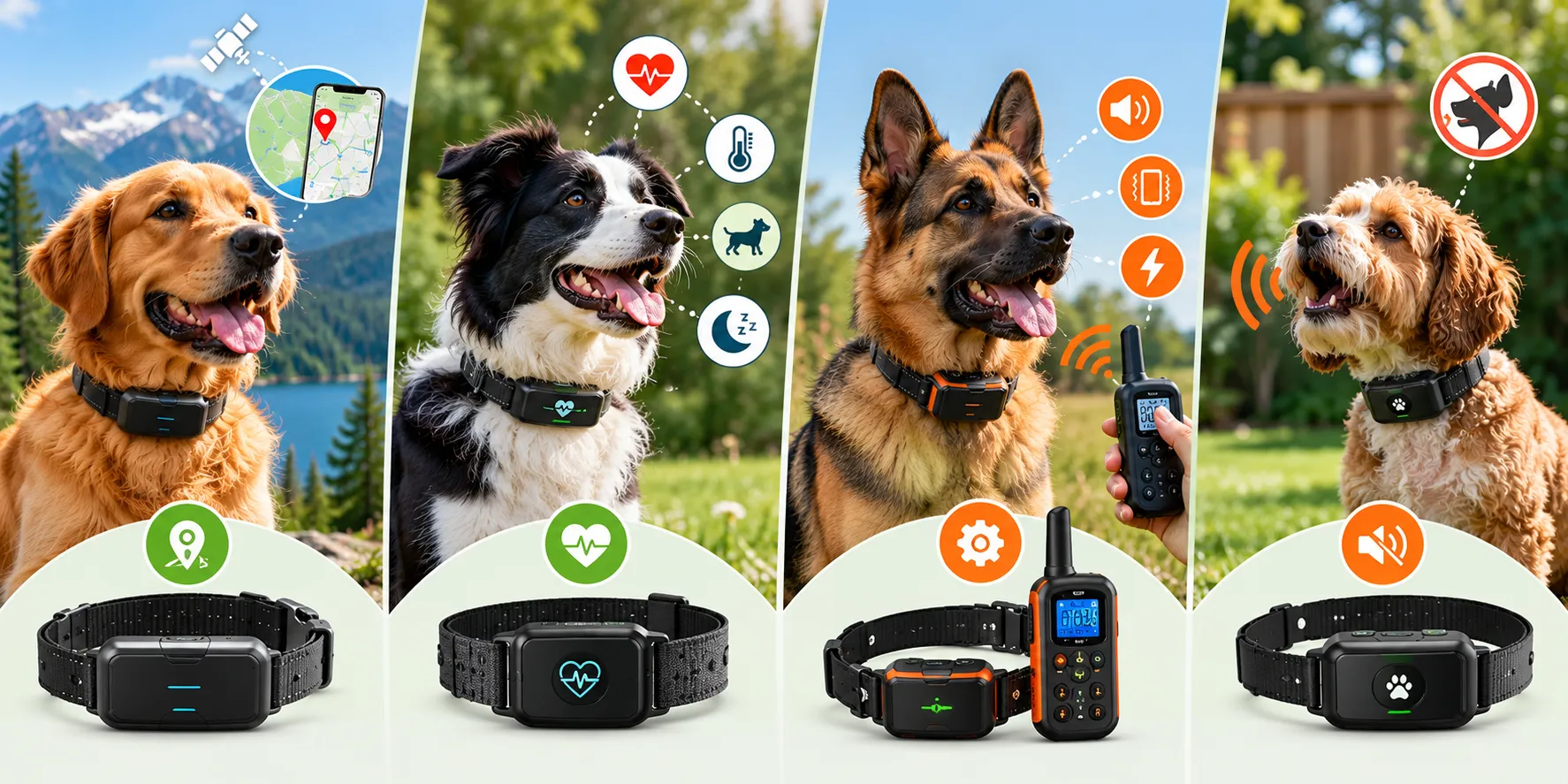
GPS/GNSS satellites help a device estimate its location. To show that location remotely in an app, the tracker usually needs a communication method such as cellular service. Depending on the product, features can include live tracking, location history, escape alerts, safe zones and activity summaries. Many cellular trackers require a subscription.
Health-monitoring collars
Health wearables may report activity, rest and selected physiological signals. Some apps flag changes from a dog’s usual pattern so an owner can observe more closely or contact a veterinarian. Measurements and algorithms vary by product. A consumer wearable is not a diagnosis and should not replace veterinary examination or treatment.
Activity trackers
Activity devices focus on movement, rest and trends over time. They can help owners discuss changes with a veterinarian or build a routine, but a daily score does not tell the whole story. Age, breed, body condition, weather and medical needs all affect appropriate activity.
Virtual-fence collars
Virtual-fence systems use location technology to define a boundary and may provide alerts or training cues near it. They are not physical fences. Accuracy depends on the system, setup and environment, so do not rely on a virtual boundary as the only protection near roads or other hazards.
Remote training collars
These use a handheld transmitter to communicate with a receiver worn by the dog. Depending on the model, signals may include tone, vibration or static stimulation. The advertised range is a manufacturer claim under certain conditions; terrain, walls, interference and battery level can affect performance. A remote range does not mean you can locate a dog on a map.
Automatic bark-control collars
These attempt to detect barking and respond automatically, sometimes using sound and vibration sensors. False triggers and fit matter. Barking may result from fear, frustration, separation distress, pain, boredom or environmental triggers; suppressing the sound alone may not solve the underlying cause.
Bluetooth tags
Bluetooth tags are generally intended for nearby finding or location updates through a compatible device network. They should not be treated as equivalent to dedicated GPS trackers with cellular live updates. Their usefulness depends on nearby compatible devices and how often the location refreshes.
Product options: strengths, limitations and who might consider them
The reviews below summarize the product information supplied for this page. They are not independent tests, and the products are not ranked by hands-on performance. Add a product image to each card by replacing the image URL placeholder with an image URL from your WordPress Media Library. Verify current models, prices, subscriptions, country support and return policies before buying.
Purina Petivity Dog GPS Tracker Collar
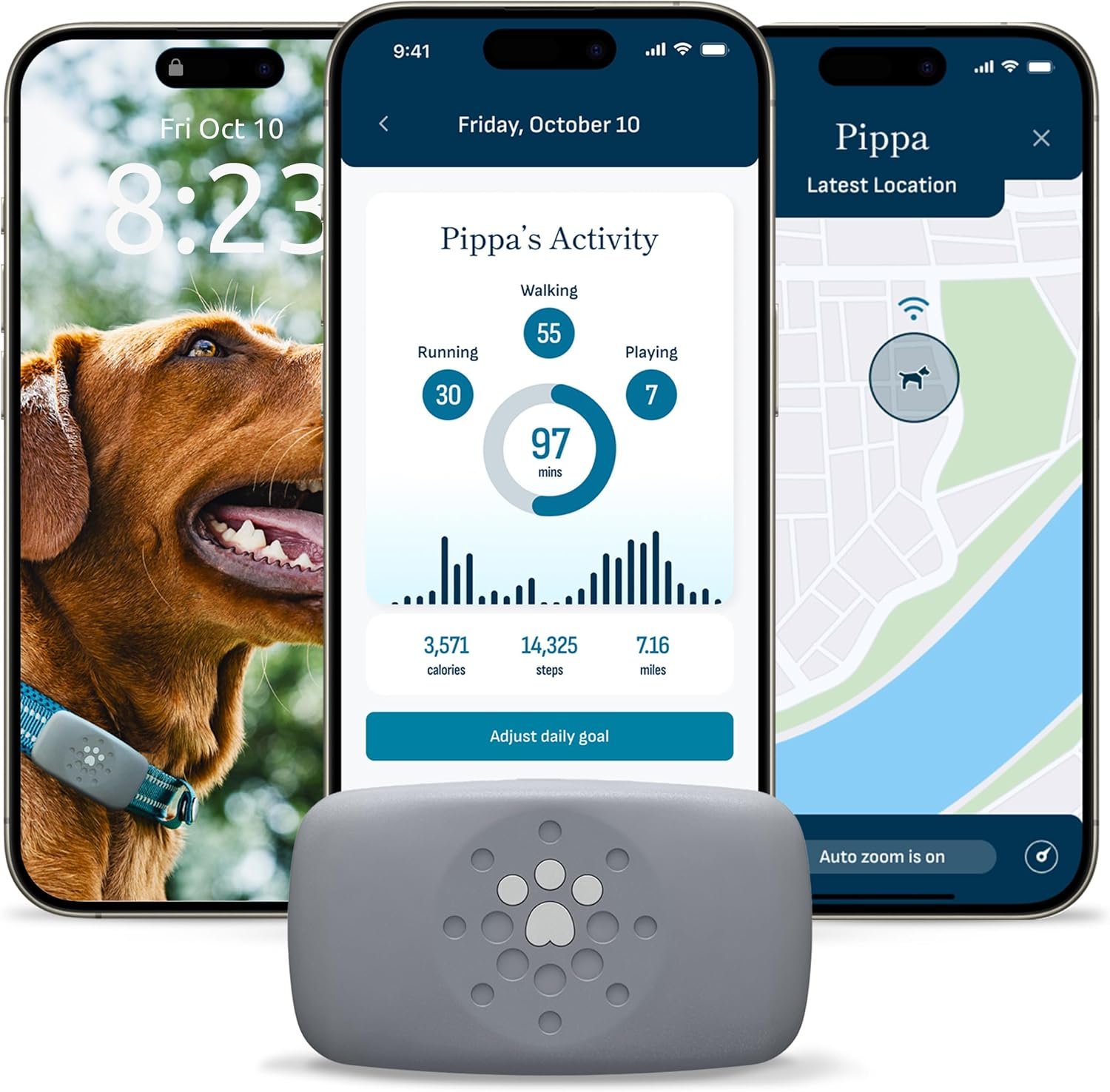
The supplied description says Petivity uses GPS for live location and tracks movement when cellular coverage is adequate. It connects to an app with a required subscription and offers personalized activity goals. The tracker is described as lightweight, durable, waterproof and attachable to a collar or harness, with a one-year limited warranty.
- Could suit: owners wanting location tracking plus activity information.
- Check: subscription price, local network coverage, attachment compatibility and warranty terms.
- Limitation: live remote updates generally need a communication channel; GPS alone does not send location to your phone.

PetPace V3.0 Dog Health Monitor
The supplied listing describes monitoring indicators such as heart rate, breathing, temperature, pulse, activity, sleep and HRV, plus AI-generated insights, GPS-related features and telehealth options. These are seller claims; ask your veterinarian how to interpret the data.
- Could suit: owners wanting wellness trends to discuss with a veterinary professional.
- Subscription: supplied text quotes $25/month initially, $300 annually or $200/year thereafter. Confirm current prices, renewals and cancellation terms.
- Check: size, supported region, connectivity, battery expectations and which telehealth services are included.
Bousnic 3300-ft Dog Remote Training Collar
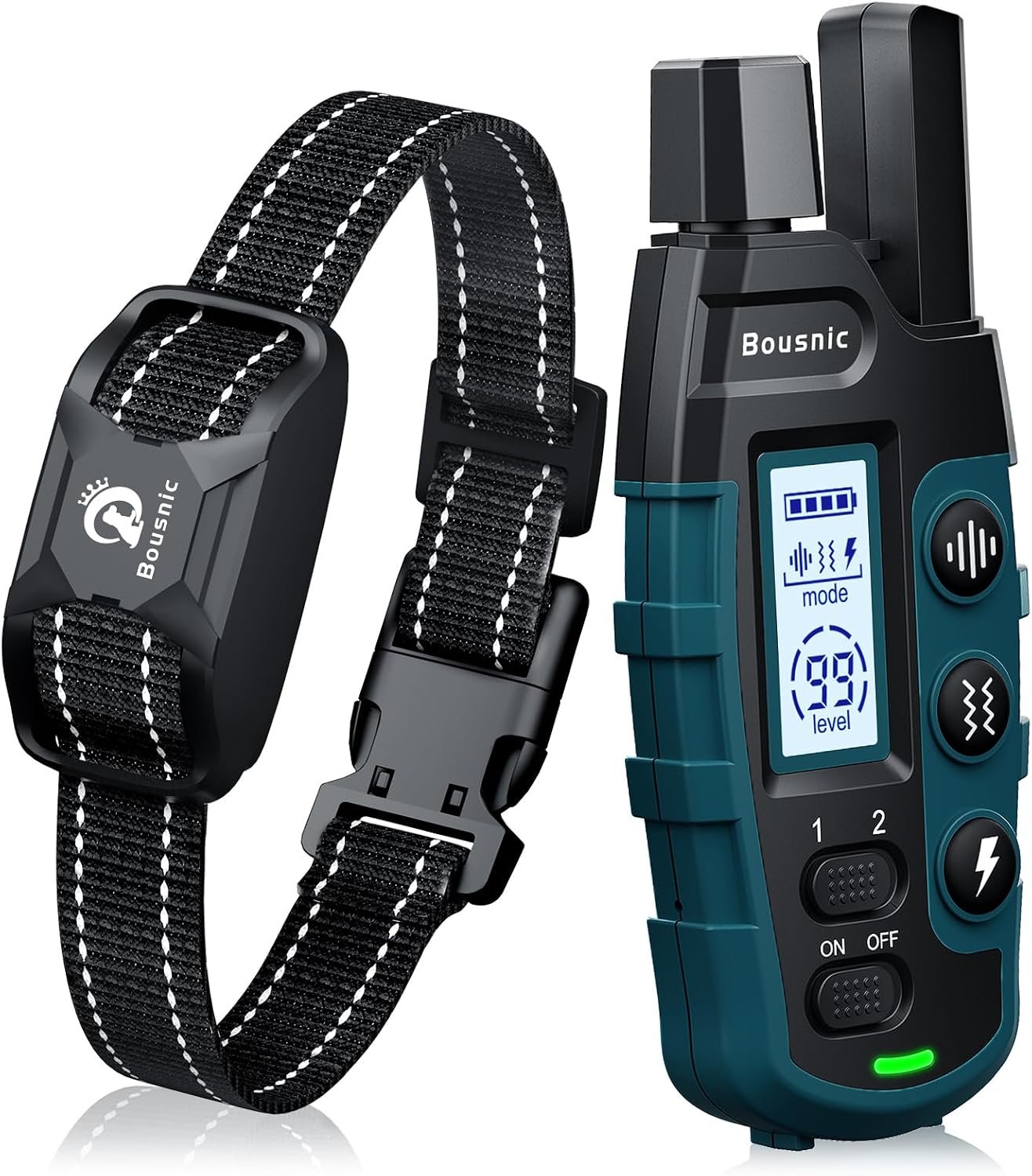
The supplied description lists beep, vibration and static-stimulation settings, a dual-channel remote for two dogs, a claimed range up to 3,300 feet and an IP67-rated receiver. Follow the manual for differences between the receiver and remote’s water resistance.
- Could suit: shoppers comparing remote-operated training tools.
- Check: minimum dog weight, fit, battery performance and remote water resistance.
- Limitation: this is not a GPS locator. Consider reward-based training and qualified advice before aversive methods.
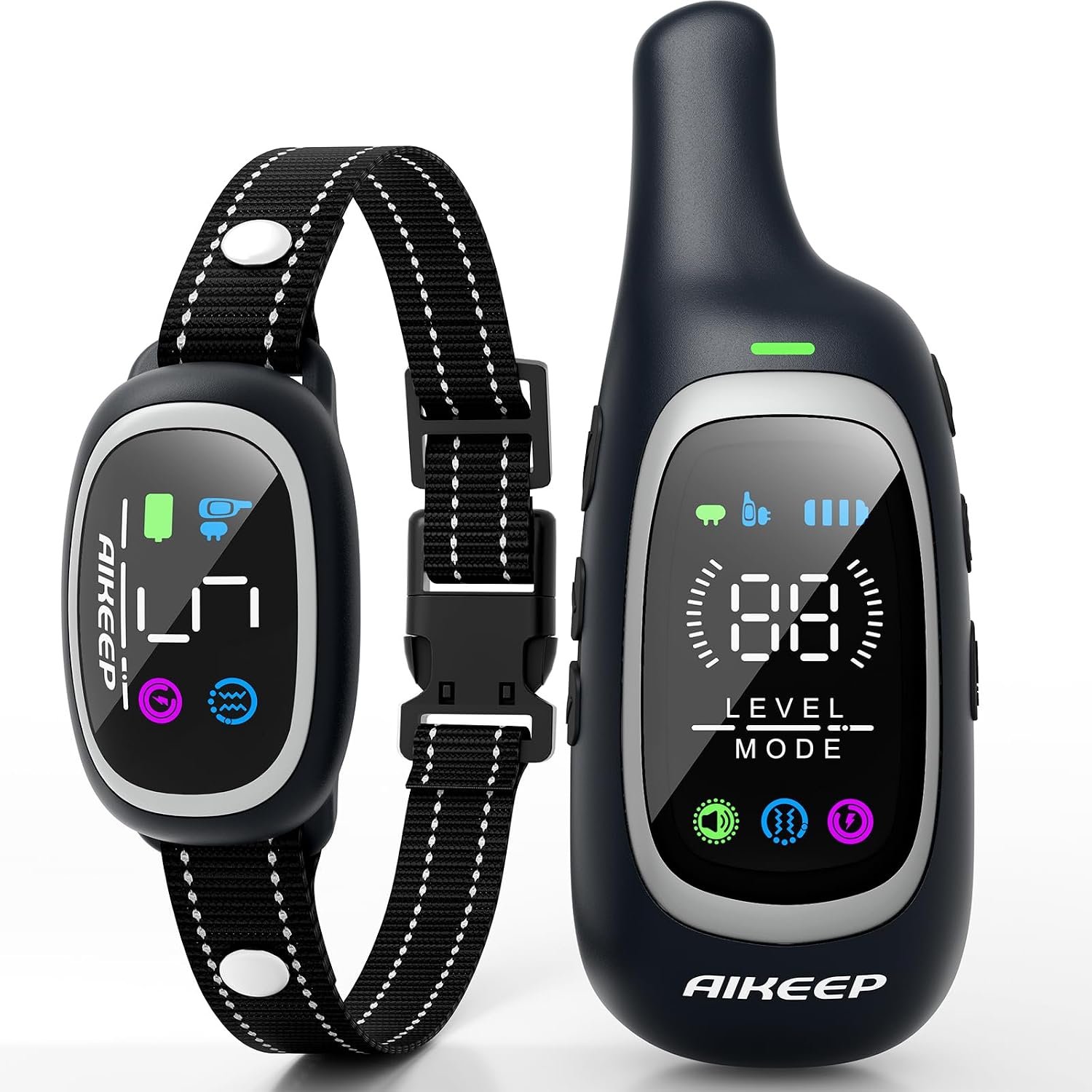
Dog Shock Collar for Two Dogs — 3300-ft Remote
This listing describes a dual-channel remote, beep, vibration and static-stimulation modes, a claimed 3,300-foot range and a rechargeable receiver. Confirm the exact model and whether two receivers are included.
- Could suit: households comparing one remote system for two dogs.
- Check: included receivers, channel selection, fit for each dog and charging instructions.
- Limitation: stated range varies by environment and is not location tracking.
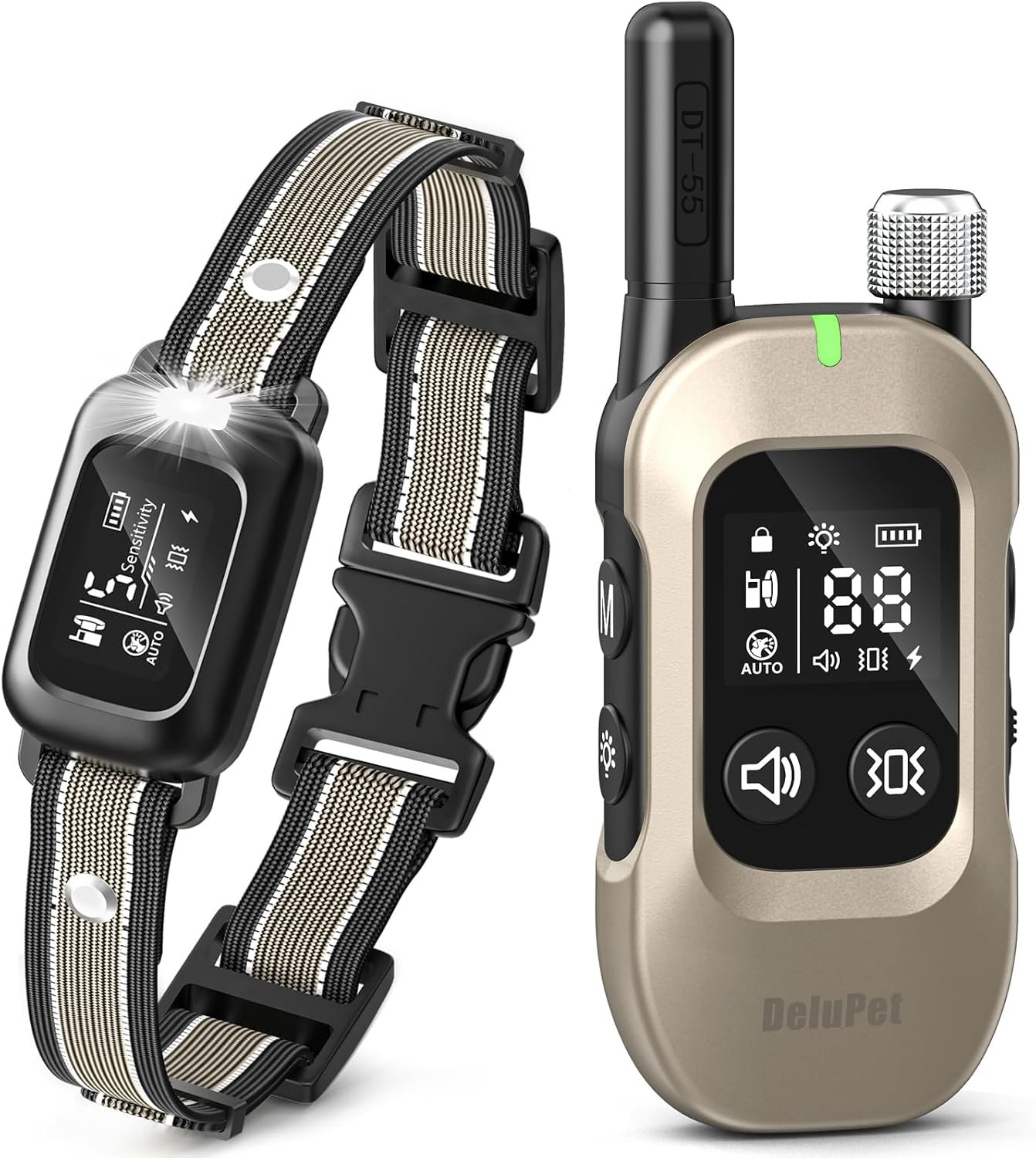
Delupet 2-in-1 Dog Bark & Training Collar
The supplied description combines remote training modes with automatic bark control, a claimed 4,500-foot range, LED light, adjustable sensitivity and rechargeable battery. It describes a pause after repeated triggers.
- Could suit: shoppers comparing combined remote-training and bark-detection devices.
- Check: exact mode behavior, detection method, safety pause, strap fit and water-resistance rating.
- Limitation: automatic correction may trigger incorrectly and may not address why a dog is barking.
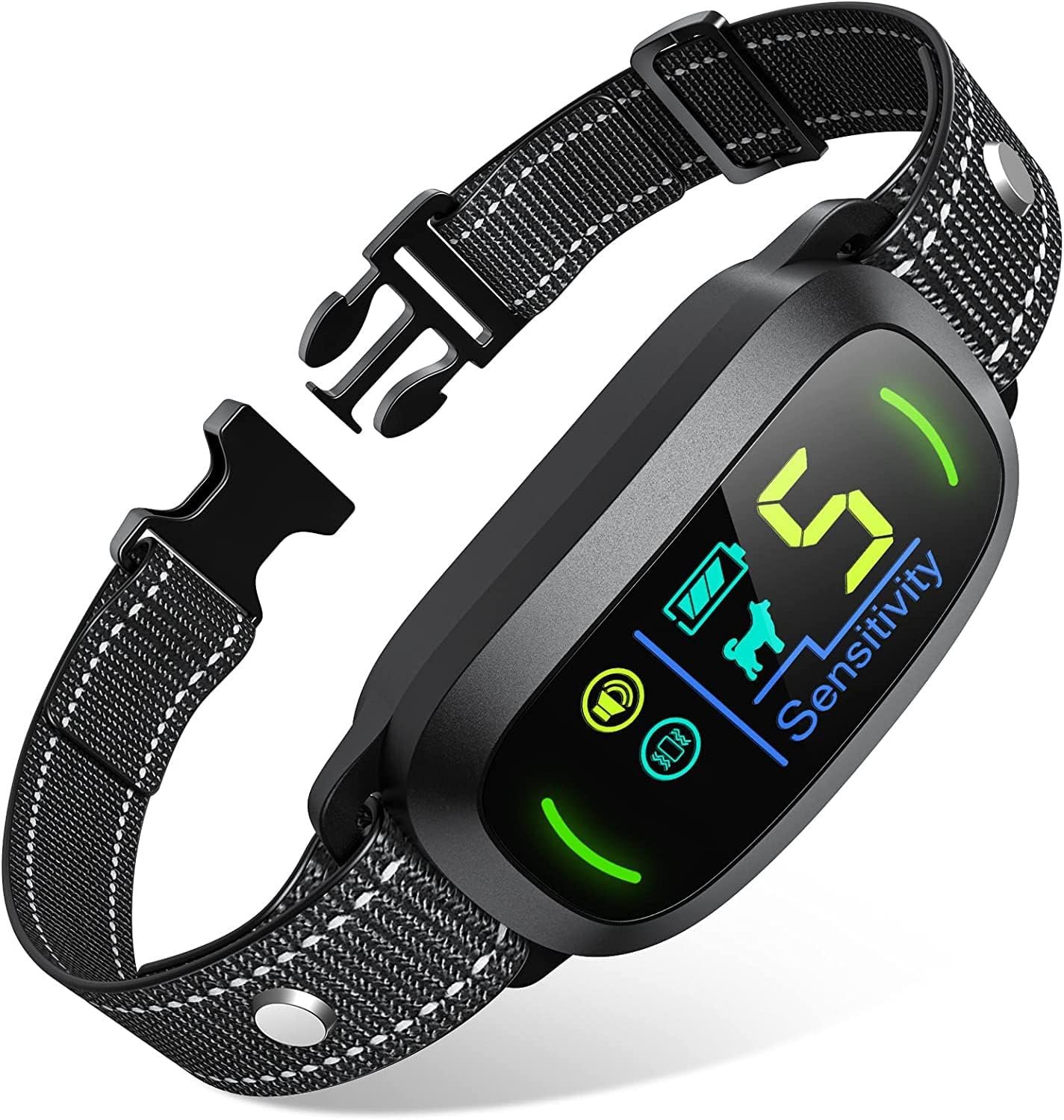
FAFAFROG Rechargeable Smart Bark Collar
The supplied listing describes four working modes, five sensitivity levels, bark recognition using sound and vocal-cord vibration, a display, a pause after repeated activation and an IP67 waterproof design. Confirm current weight, age and neck-size guidance.
- Could suit: people researching automatic bark-control devices with adjustable settings.
- Check: minimum age, fit, sensitivity instructions and recommended use duration.
- Limitation: this is not GPS tracking. Investigate anxiety, discomfort, fear or other causes of barking first.
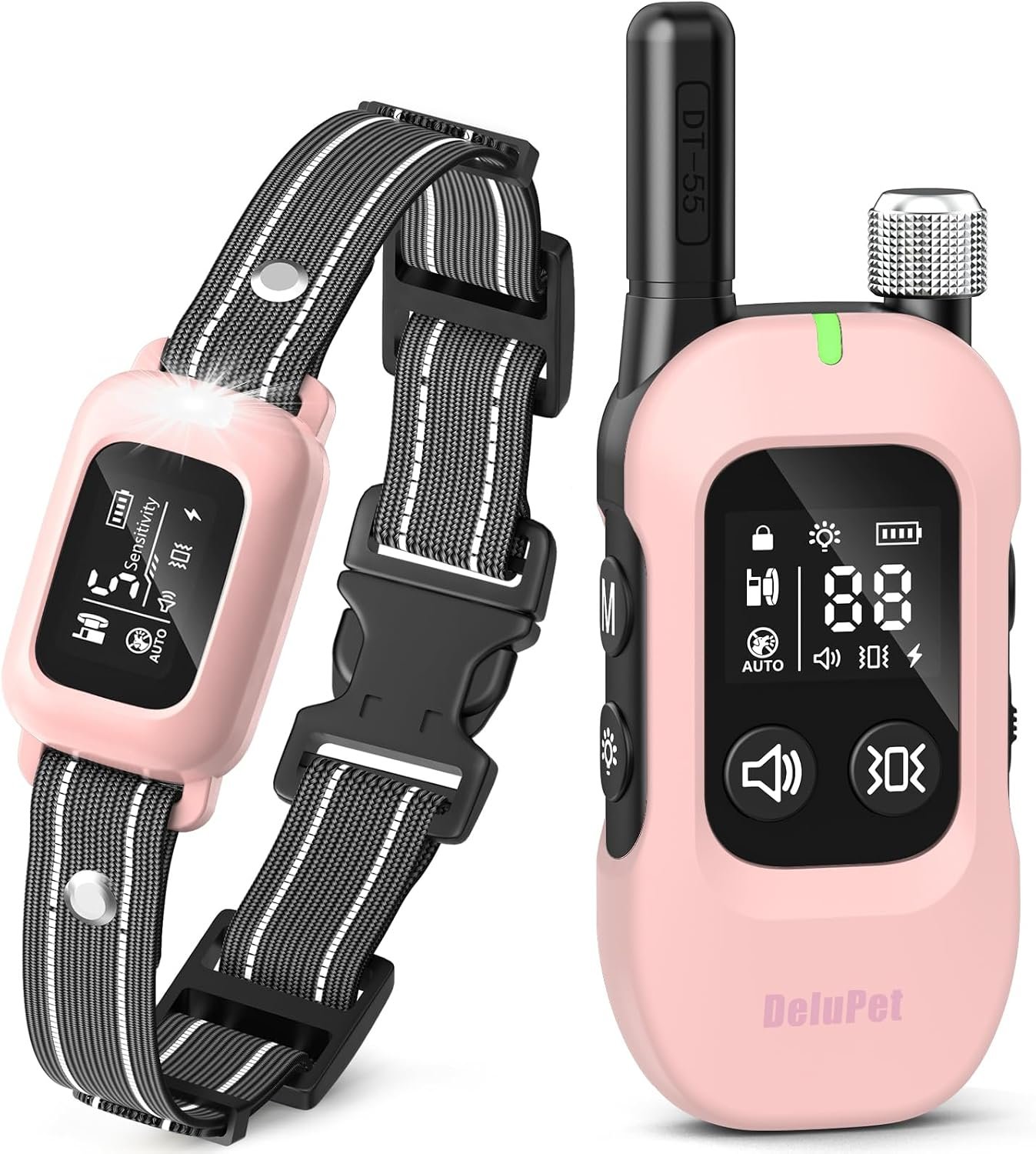
AIKEEP 2-in-1 Shock & Bark Collar
The supplied description lists remote training and automatic bark modes, a claimed 3,300-foot range, dual-channel operation, an IP67 receiver, safety lock and adjustable strap. Verify the exact contents and instructions before purchase.
- Could suit: shoppers comparing combination devices rather than standalone GPS or health trackers.
- Check: automatic vs. remote modes, safety-lock operation, strap fit and charging guidance.
- Important: do not use static stimulation casually or as a substitute for understanding a behavior.

AI Anti-Bark Collar with Dual Sensors
The supplied description says this collar combines sound detection with a motion sensor, offers eight sensitivity levels and provides beep, vibration and static-stimulation options. It also describes progressive settings, a pause after repeated triggers and an IP67 rating. Confirm the exact model and current instructions.
- Could suit: shoppers comparing automatic bark-control devices with adjustable sensitivity.
- Check: sensor calibration, false triggers, fit, safety pause and recommended use duration.
- Limitation: sensor-based detection can make mistakes. Observe your dog and stop use if distress or skin irritation occurs.
How do smart dog collars work?
- GPS/GNSS: uses satellite signals to estimate location. Trees, buildings, terrain and device placement may affect accuracy.
- Cellular service: transmits location or other data to an app. Live updates usually require network coverage and an active plan.
- Bluetooth: connects nearby devices or tags to a phone or compatible finding network; Bluetooth alone is not long-distance live GPS tracking.
- Wi-Fi: may support syncing, indoor connectivity or battery-saving features, depending on the model.
- Motion and physiological sensors: measure or estimate activity, rest or selected body signals. Fit and algorithms affect readings.
- Radio remote: sends commands from a handheld transmitter to a training receiver; this is different from location tracking.
Can a smart dog collar work without cellular service?
A GPS device may still calculate a position when cellular service is unavailable, but it may not be able to send that position to your phone in real time. Some devices store information for later syncing or support other connections in specific situations. Ask whether the product offers live updates, local storage, delayed updates or no remote visibility without coverage.
Read our related guide: Can GPS Dog Trackers Work Without Cellular?
GPS accuracy vs. update speed
Accuracy describes how close the reported position is to the dog’s actual location. Update speed describes how often the app receives a new position. A tracker may be reasonably accurate but update slowly, or update frequently while the position fluctuates. Check both and account for coverage, terrain and battery-saving settings.
Subscriptions and the real cost of ownership
Some smart collars require no monthly service; others charge for cellular connectivity, health analytics, cloud history or telehealth. A remote training collar may use its included transmitter without a cellular plan, while a GPS tracker commonly needs a plan to deliver remote updates. Always confirm the specific model’s requirements.
| Cost item | Why it matters | Question to ask |
|---|---|---|
| Device price | Accessories or extra receivers may cost more. | What is included in the box? |
| Subscription | May unlock cellular service, analytics or telehealth. | Is it required? What is the renewal rate? |
| Plan duration | Monthly, annual and multi-year plans can differ. | Can I cancel, and are fees refundable? |
| Coverage | Service varies by country, network and region. | Will it work where my dog lives and travels? |
| Warranty and replacement | Straps, batteries or damaged devices add cost. | What does the warranty exclude? |
Estimate first-year cost by adding the device price, required plan and essential accessories. For longer ownership, add likely renewal costs rather than comparing devices by the upfront price alone. Verify current prices and plan terms on the retailer’s checkout page.
How to choose the right smart collar

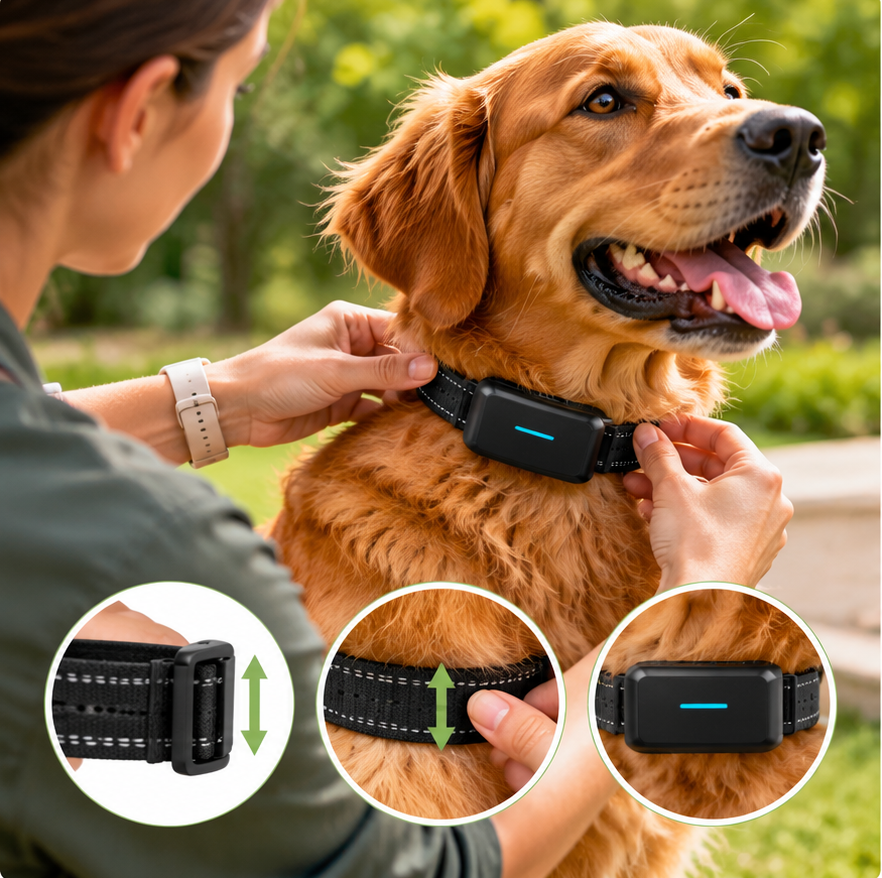
1. Match the device to your main goal
- Finding an escaped dog: prioritize GPS tracking, coverage, escape alerts and battery life.
- Wellness trends: review actual measurements, data interpretation, privacy and veterinary context.
- Daily activity: look for useful trends, comfortable fit and an understandable app.
- Training: choose a humane, well-understood method and consider a qualified trainer.
- Barking: identify triggers and possible causes before considering an automatic device.
2. Fit, weight and comfort
A collar should fit securely without rubbing, pinching or restricting breathing or movement. Check neck-size and weight guidance, the device’s actual weight and how it attaches to a collar or harness. Recheck fit as a puppy grows and inspect the skin regularly.
3. Battery life and charging
Advertised battery life depends on settings and use. Frequent live GPS updates, weak coverage and repeated alerts may increase power use. Ask whether a stated battery figure assumes standby, indoor Wi-Fi or active tracking. Establish a charging routine and do not rely on a nearly depleted tracker as your only safety measure.
4. Waterproofing and durability
“Water-resistant,” “waterproof” and an IP rating are not identical promises. Confirm which component is rated and whether swimming is supported. Follow instructions about mud, salt water, cleaning and drying charging ports before charging.
5. App usability, alerts and privacy
Check phone compatibility, family location sharing, alert customization and data access. Read the privacy policy to understand how location and health data are stored, shared and deleted. Keep account credentials secure if other people can access your dog’s location.
6. Coverage, returns and warranty
Consider where you walk your dog: city streets, woods, farmland or remote trails. Check carrier support, roaming and offline behavior. Confirm the return window, whether activation or subscription fees are refundable and what the warranty covers. Keep packaging until the device works as expected.
Are smart dog collars safe?
Safety depends on the design, fit, settings, use duration and the individual dog. Monitor your dog when introducing a wearable and remove it if you notice rubbing, redness, swelling, distress or unusual behavior.
Health data also needs context. A wearable alert can be a reason to observe your dog or contact your veterinarian, but it cannot confirm a diagnosis. If your dog seems seriously unwell, has difficulty breathing, collapses or shows another urgent symptom, seek veterinary care rather than waiting for an app reading.
Safety checklist
- Confirm fit, weight limits and manufacturer instructions.
- Inspect the skin and contact points regularly.
- Keep charging ports dry and follow temperature guidance.
- Understand all alerts, modes and automatic responses before use.
- Maintain ordinary identification and supervision; no device replaces responsible care.
- Review app permissions and location-sharing access.
Frequently asked questions about smart dog collars
What is the best smart dog collar?
It depends on your goal. GPS trackers locate dogs, health wearables focus on wellness trends, and training or bark-control collars serve other purposes. Compare coverage, fit, subscriptions and limitations. We have not independently tested the products listed here.
Do smart dog collars need Wi-Fi?
Not all do. Some use cellular networks for remote updates, some use Bluetooth nearby, and some use Wi-Fi for syncing or indoor features. Check the exact model and what stops working when a connection is unavailable.
Can a GPS collar work without cellular coverage?
A GPS receiver may calculate a position without cellular service, but sending it remotely to your phone usually requires a communication method. Depending on the model, updates may stop or data may be stored for later syncing.
Are smart collars the same as GPS trackers?
No. GPS trackers are one kind of smart wearable. “Smart collar” can also mean health monitoring, activity tracking, virtual fencing, remote training or bark control. Check the actual features rather than relying on the label.
Can a smart collar monitor my dog’s health?
Some report activity, sleep or selected physiological measurements. Sensors and accuracy vary. Treat the data as supplementary information, not a diagnosis, and discuss concerning changes with your veterinarian.
Are smart dog collars waterproof?
Some have water-resistance ratings, but the rating may apply only to a particular component. Check whether swimming is supported, whether the remote is water-resistant and how to dry the device before charging.
Can bark collars solve excessive barking?
They may interrupt barking in some circumstances, but barking can be related to fear, anxiety, boredom, pain or environmental triggers. Identify the cause first and consider reward-based behavior support or veterinary advice.
Do remote training collars track location?
Not unless the specific model also includes a location-tracking system. A remote’s advertised control distance is not the same as GPS tracking range.
What should I check before buying?
Check purpose, fit, weight, battery, connectivity, coverage, app compatibility, subscription requirements, water-resistance rating, warranty and return policy. For health wearables, verify the measurements provided and the limits of their interpretation.
Final thoughts: choose features that solve your real problem
Smart dog collars can be useful, but no one device is best for every dog or household. Decide whether you need location tracking, wellness information, activity summaries or support with a training issue. Then compare coverage, comfort, subscription costs, battery life and safety.
For location-tracking questions, read our guide to GPS dog trackers without cellular coverage. Before purchasing, confirm current specifications, price, plan terms and suitability for your dog on the retailer’s page.
Editorial note: This guide summarizes supplied product descriptions and general buying considerations. Features, prices, availability and subscription terms can change. Confirm current details with the manufacturer or retailer. This article is informational and is not veterinary advice.