What Are the Limitations of GPS Dog Trackers?
GPS dog trackers can help you locate your pet, but accuracy, signal coverage, battery life and other limitations can affect their performance. Discover the eight key drawbacks every dog owner should understand before buying.
Affiliate disclosure: This article may contain affiliate links. If you purchase through qualifying links, we may earn a commission at no additional cost to you. Our recommendations should be based on product suitability, transparent pricing and realistic performance expectations.
GPS dog trackers can provide valuable peace of mind by helping owners locate their dogs, monitor their movements and receive alerts when a pet leaves a designated area. For owners of escape-prone dogs, active hunting breeds or adventurous hiking companions, these devices can provide useful information when a pet wanders away.
However, GPS dog trackers are not infallible. They can display inaccurate locations, lose connectivity, deliver delayed updates, run out of battery power or become separated from the dog. Some models also require ongoing subscription fees, and no tracker can guarantee that a missing pet will be recovered safely.
Understanding GPS dog tracker limitations is essential before spending money on a device that you may depend on during an emergency.
This guide examines eight major disadvantages of GPS dog trackers, explains how different tracking technologies compare, and explores what American dog owners should consider before choosing a device.
Quick Answer: What Are the Main Limitations of GPS Dog Trackers?
The most significant limitations of GPS dog trackers include:
8 GPS Dog Tracker Limitations at a Glance
These limitations do not mean that GPS trackers are ineffective. They mean that buyers should evaluate a tracker according to their dog’s needs, the technology it uses and the environments where it will be used.
How Do GPS Dog Trackers Work?
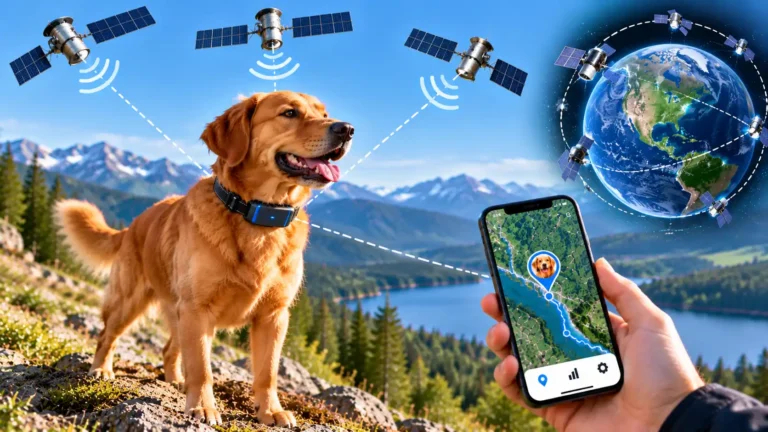
Most consumer GPS dog trackers use a positioning receiver to calculate the device’s location from satellite signals. The device then uses a communication method, often a cellular connection, to send that information to an application on the owner’s smartphone. The app displays the reported location on a map.
These are two separate processes: calculating the location and transmitting it to the owner. Lildog’s explanation of GPS dog trackers discusses this distinction and the technology behind everyday tracking devices.
1. Satellite positioning
The tracker calculates its location using satellite signals.
2. Data transmission
A compatible network or receiver carries the location information.
3. App display
The owner sees the reported position and its update time.
Why this distinction matters
A tracker may calculate a position but fail to transmit it. Alternatively, it may transmit location data successfully even though the position is no longer current. Understanding this difference helps explain why GPS tracking can fail in different ways.
1. Location Accuracy Is Not Always Exact
One of the most important GPS dog tracker limitations is that the location displayed on a smartphone map may not match the dog’s precise physical position.
GPS accuracy depends on satellite visibility, receiver quality, signal interference and surrounding structures. The U.S. government’s GPS guidance explains that buildings, trees and reflected signals can affect positioning accuracy. Learn about GPS accuracy from GPS.gov.
What affects GPS accuracy?
- Tall buildings: Urban streets surrounded by buildings can obstruct or reflect satellite signals.
- Dense forests: Tree cover can make satellite reception more challenging.
- Indoor environments: Garages, enclosed buildings and covered parking areas can limit direct satellite reception.
- Uneven terrain: Ravines, steep slopes and other landscape features may obstruct signals.
- Device design: Antenna quality and receiver performance influence positioning results.
Accuracy must also be distinguished from update frequency. A tracker may provide a reasonably accurate position that is several minutes old. That is a different problem from calculating an inaccurate position.
A real-world example
Imagine that your dog slips out of your yard in a suburban neighborhood. Your tracking app displays a location near the house next door.
You walk toward the map marker, but the dog is actually behind a nearby garage. The tracker may have provided a useful search area without identifying the exact place where the dog is standing.
In a more serious situation, a dog could move a considerable distance between location updates. Even if the previous position was accurate, it may no longer be useful as a precise current location.
What should buyers look for?
- Review the manufacturer’s stated positioning accuracy and test conditions.
- Check whether the device supports multiple positioning systems.
- Confirm whether the app displays the time of the latest update.
- Consider how the tracker performs in your dog’s usual environments.
Avoid accepting a fixed accuracy figure as a guarantee under every condition. For a deeper technical comparison, publish a supporting article about how accurate GPS dog trackers are.
2. Communication Coverage Can Be Limited
A tracker can calculate a location without being able to send that location to your phone.
This is particularly important for cellular GPS dog trackers. They typically use mobile networks to transmit location information, so performance depends partly on the availability of compatible network service.
Why does tracking signal coverage matter?
Remote hiking trails
Rural trails and mountainous areas may have weak or nonexistent cellular coverage. A cellular tracker may be unable to send a fresh location until service becomes available.
Dense urban neighborhoods
Mobile coverage may be available, but tall buildings and other structures can affect satellite positioning.
Wooded properties
Dense vegetation, terrain and limited cellular coverage can create different challenges for the same device.
Road trips and travel
Coverage and supported networks can change when you travel between states or visit areas served by different network providers.
Can a dog tracker lose its signal?
Yes. Depending on the technology, a tracker may lose satellite reception, cellular connectivity or its link to a dedicated receiver.
Cellular GPS trackers use satellite positioning and typically require cellular connectivity to deliver remote updates. Radio-based tracking collars communicate with a compatible receiver and do not depend on a cellular network in the same way. Satellite-connected trackers have their own hardware, coverage and service requirements.
Gun Dog Supply’s buyer’s guide explains the differences between GPS tracking collars and radio-telemetry systems, including how terrain and line of sight affect practical range. Explore the tracking collar buyer’s guide.
What this means for US dog owners
If you regularly hike in national forests, visit remote campsites or live on rural property, check coverage at the places where you intend to use the tracker.
Do not assume that a product advertised as offering unlimited range provides uninterrupted connectivity everywhere. The advertised capability and actual coverage are not the same thing.
Buying tip
For remote outdoor use, compare cellular GPS with radio-based systems and suitable satellite-connected devices. Select the technology according to your location, communication needs and budget.
3. Updates May Be Delayed
Many GPS dog trackers advertise live tracking. However, “live” does not necessarily mean that the location shown in the app is continuously refreshed or instantly available.
The device needs to obtain location information, process it and transmit it to the application. Depending on the model, it may also use different update intervals in normal and live tracking modes.
Why might tracking updates be delayed?
- Poor satellite reception may prevent a fresh location fix.
- Weak cellular service may delay data transmission.
- Battery-saving settings may reduce reporting frequency.
- Network or application delays may affect the information displayed.
- The device may need time to obtain a new position after moving into a different environment.
Why this matters during an escape
Imagine your dog slips through an open gate while you are working in your backyard. You open the app and see a marker beside the driveway. However, the timestamp indicates that the location was recorded a few minutes earlier.
Your dog may have continued down the street, entered a neighboring property or changed direction. The map is providing historical information rather than a guaranteed current position.
That is why the age of a location update is critical during a search.
How to evaluate live tracking claims
- Check the stated update interval in standard tracking mode.
- Compare the update frequency available in live tracking mode.
- Confirm whether the app displays the last successful update.
- Find out whether intensive tracking reduces battery life.
- Check whether the device retains location history during connectivity interruptions.
4. Battery Life Is Limited
Battery life can determine whether a GPS dog tracker is available when you need it most.
Trackers need energy to calculate locations, transmit data and operate additional features. Frequent updates, poor network conditions and other operating demands can increase power consumption.
What affects battery performance?
| Factor | Potential impact |
|---|---|
| Frequent live tracking | More frequent location reporting can increase energy consumption. |
| Weak cellular coverage | Maintaining or re-establishing connectivity may consume more power. |
| GPS reception difficulties | Obtaining a fresh location may require additional energy. |
| Battery capacity | Larger batteries may improve endurance but increase device size and weight. |
| Operating conditions | Temperature and environmental factors can affect battery performance. |
| Battery age | Rechargeable battery capacity can decline over time. |
Why advertised battery life can be misleading
Manufacturers may advertise battery life under specific settings and usage conditions. The actual result may differ depending on how frequently the device tracks movement and how reliably it connects.
For example, a dog that spends most of the day in a familiar yard may need less intensive tracking than a dog that regularly goes hiking, runs off leash in permitted areas or triggers frequent live tracking sessions.
A longer battery life is useful, but it should be evaluated alongside update frequency and communication reliability.
What should you compare?
- Typical battery-life estimates rather than maximum claims alone.
- Charging time and charging convenience.
- Battery notifications and low-battery warnings.
- The effect of live tracking on power consumption.
- Battery performance under the conditions in which you will use the device.
5. Subscription Fees Can Increase the Total Cost
The initial purchase price is only one part of the cost of owning a GPS dog tracker.
Many cellular GPS trackers require a monthly or annual service plan for data transmission and app-based tracking. Other models use a compatible receiver or offer different service arrangements.
Subscription requirements vary, so it is important to verify what a specific product needs rather than assuming all GPS trackers require the same plan.
What may be included in a subscription?
- Cellular data connectivity.
- Live tracking.
- Location history.
- Virtual fence alerts.
- Activity monitoring or other premium features.
Calculate the total cost of ownership
Consider this hypothetical example of a cellular GPS tracker.
| Expense | Illustrative amount |
|---|---|
| Initial tracker purchase | $80 |
| Monthly subscription | $7 |
| First-year subscription cost | $84 |
| Total first-year cost | $164 |
| Total cost over three years | $332 |
Illustrative figures only, not current pricing for a specific product. Taxes, replacement devices and other fees are excluded.
The example shows how recurring fees can make a relatively inexpensive device more costly over time.
Questions to ask before purchasing
- Is a subscription mandatory?
- Does the plan include all advertised features?
- Are monthly and annual payment options available?
- What happens if the subscription expires?
- Can the tracker still record or transmit locations without an active plan?
- Is the service supported in every region where you plan to use it?
Affiliate buying advice
Explaining recurring fees is essential for trustworthy affiliate marketing. Readers should understand the ongoing commitment before following a product recommendation.
6. A Tracker Can Be Lost, Damaged or Detached
A GPS tracker is only useful for locating a dog if it remains attached to the dog and continues to function.
A collar buckle may break, an attachment may loosen or a device may become damaged during an outdoor adventure. If the tracker separates from the dog, its location no longer reliably represents the dog’s location.
What can go wrong?
- The collar or harness becomes loose.
- The tracker attachment breaks or slips free.
- The device catches on a fence or another object.
- The tracker suffers damage from an impact.
- The device is not securely reattached after grooming or charging.
- The tracker is unsuitable for the dog’s size or activity level.
Example: The tracker shows the wrong target
Suppose a dog runs through a gap in a fence and the tracker becomes caught on the fence. The owner opens the app and sees a location beside the fence.
The device may be reporting its own position correctly, but the dog is no longer there.
Important distinction: A GPS tracker locates the tracking device, not the dog independently of that device.
What to check before buying
Look for secure attachment options, appropriate weight, durability and suitable water resistance.
The device should fit comfortably on the dog’s collar or harness without excessive movement, rubbing or a snagging risk. Regularly inspect the attachment and follow the manufacturer’s fitting instructions.
A tracker that is uncomfortable or difficult to secure consistently may be less useful than a simpler, better-fitting alternative.
7. GPS Tracking Does Not Guarantee Recovery
The most important limitation is that locating a tracker and recovering a missing dog are two different things.
A tracker can help narrow a search area, but it cannot guarantee that a dog will be found safely. The dog may move after the last update, enter inaccessible terrain or encounter hazards that the device cannot prevent.
What GPS tracking cannot do
- Physically prevent a dog from escaping.
- Stop a dog from running into traffic.
- Prevent an encounter with wildlife or another animal.
- Guarantee that a location remains current.
- Ensure that a person can safely access the dog’s location.
- Replace identification and appropriate supervision.
Example: A dog goes missing on a hiking trail
A dog escapes during a hike in a wooded area. The tracker shows a recent position near a steep hillside.
The information provides a starting point, but the owner may not be able to reach the area safely. If the dog continues moving or the tracker loses connectivity, the location may become outdated.
A responsible response may require help from local animal control, nearby veterinary practices, shelters or other appropriate services.
Combine tracking with other safety measures
Identification tag
Keep your contact information current on a properly fitted collar tag.
Registered microchip
Maintain accurate registration details so you can be contacted if your dog is found and scanned.
Secure environment
Use appropriate fencing, secure gates and suitable restraints to reduce escape opportunities.
Training and supervision
Maintain recall training and supervise your dog according to its behavior and environment.
A microchip is not a GPS device. It helps identify a pet when someone finds it and has access to a compatible scanner. A GPS tracker helps report a device’s location. They address different problems and can complement each other.
8. Comfort, Durability and Smart Features Have Trade-Offs
Modern pet trackers may offer geofencing, activity monitoring, temperature readings and other features. However, additional functions do not automatically make a device more reliable.
The physical design of a tracker creates trade-offs between battery capacity, weight, size, antenna performance and comfort. These considerations are particularly important for devices intended to be worn for extended periods.
Comfort matters for everyday use
A device that is too heavy or poorly fitted may be uncomfortable for a smaller dog. An unsuitable attachment can rub against the skin or catch on objects.
Before buying, consider:
- The dog’s size and neck or harness fit.
- Device weight and dimensions.
- Attachment security.
- Water and dust resistance.
- Durability for running, swimming or outdoor activities.
- Charging convenience and access to the device.
Smart features have limitations, too
Geofencing can notify you when a tracker crosses a virtual boundary, but the alert depends on location reporting, settings and connectivity. It should not be treated as a physical barrier.
Activity monitoring can help owners understand movement patterns, but it does not replace veterinary assessment. Temperature or other sensor readings should not automatically be interpreted as a definitive diagnosis.
A peer-reviewed study published in Animals in 2021 assessed radiofrequency exposure associated with pet-tracking devices and other sources. Its assessment found exposure below the relevant international reference levels and concluded that adverse health effects from the assessed exposure levels were unlikely. Read the peer-reviewed study.
GPS vs. Bluetooth vs. Radio Trackers: Which Has the Fewest Limitations?
There is no universally best tracking technology. The right option depends on how far your dog travels, where you live and whether you need a phone-based tracking app.
Cellular GPS Tracker
Cellular GPS trackers can provide remote location updates through a compatible mobile network.
Main limitations: Cellular coverage, recurring subscription costs for many models and battery consumption.
Consider it when: You want smartphone-based tracking for walks, daily activities and travel through areas with suitable cellular coverage.
Bluetooth Tracker
Bluetooth trackers can help locate nearby items or pets, depending on the product. Some also rely on a compatible crowd-finding network for remote location updates.
Main limitations: Limited direct Bluetooth range and dependence on nearby compatible devices or network availability for certain remote-finding features.
Consider it when: You need a supplementary locating aid and understand that it is not equivalent to independent GPS tracking.
Radio-Based Tracking System
Radio-based systems can work without cellular coverage when used with a compatible receiver.
Main limitations: Practical range, terrain, line of sight, receiver compatibility and equipment cost.
Consider it when: You regularly work or travel with dogs in remote outdoor environments where cellular service is unreliable.
What about Apple AirTag?
An Apple AirTag is not a dedicated GPS dog tracker. It uses Bluetooth and Apple’s Find My network to help locate an item when compatible Apple devices detect it.
It may be useful as an additional finding aid in some environments, but it should not be treated as a substitute for a dedicated dog-tracking system. Its usefulness for a missing dog depends on the surrounding network and whether the tag remains attached.
| Feature | Cellular GPS | Bluetooth | Radio-based |
|---|---|---|---|
| Remote tracking | Yes, where compatible service is available | Depends on the finding network | Within the system’s practical range |
| Cellular service required | Usually for remote app updates | Not for direct Bluetooth communication | No |
| Subscription | Common, but model-dependent | Product-dependent | Often not required for radio communication itself |
| Best consideration | Connected everyday use | Nearby locating | Remote outdoor tracking |
This table describes general technology differences. Actual capabilities depend on the individual product and its supported services.
For additional background, see this GPS and Bluetooth comparison and the radio tracking collar buyer’s guide.
How to Choose a GPS Dog Tracker Despite These Limitations
The best way to evaluate a GPS tracker is to begin with your dog’s routine and the conditions in which tracking would be most valuable.
Before-You-Buy Checklist
Confirm coverage in your area Check the device’s supported networks and your usual walking, hiking and travel locations.
Review location update behavior Compare normal and live tracking intervals and confirm whether the app displays timestamps.
Compare realistic battery life Look for expected battery performance under typical use, not only the maximum advertised figure.
Calculate long-term costs Include the purchase price, subscription fees and any required accessories.
Check fit and durability Make sure the tracker suits your dog’s size, activity level and collar or harness.
Understand offline behavior Confirm whether location history is retained and which features stop working without connectivity.
Maintain backup safety measures Keep identification information current and use appropriate fencing, supervision and training.
A tracker that works well in your neighborhood may not be the best option for a remote hiking trip. Similarly, a device with long advertised battery life may not suit an owner who needs frequent live updates.
Prioritize the features that address your actual risks rather than paying extra for functions you may never use.
Are GPS Dog Trackers Worth It?
For many dog owners, yes. GPS trackers can provide valuable location information, help identify when a dog leaves a designated area and support faster responses when a pet wanders away.
However, the benefits depend on the device’s suitability for your environment and how consistently it is used.
| GPS tracking may be useful for | Other safety measures remain important for |
|---|---|
| Dogs with a history of escaping | Dogs living in homes with unsecured gates |
| Owners who hike or travel with their dogs | Dogs that may chase wildlife or traffic |
| Families sharing care between walkers and sitters | Owners who need reliable identification if a tracker is lost |
| Owners who want location history or movement information | Dogs in remote areas with limited cellular coverage |
The goal is not to eliminate every possible risk. It is to add a useful layer of information while maintaining appropriate supervision, training and identification.
Frequently Asked Questions About GPS Dog Tracker Limitations
What are the disadvantages of GPS dog trackers?
The main disadvantages are variable location accuracy, network coverage limitations, delayed updates, battery requirements, possible subscription fees and the risk of losing or damaging the device. GPS tracking also cannot guarantee the recovery of a missing dog.
Can a GPS dog tracker work without cell service?
Some tracking systems can operate without cellular service. Radio-based systems may communicate with a dedicated receiver, and satellite-connected systems may provide another option where supported. A cellular GPS tracker generally needs compatible network coverage to transmit remote location updates.
Why does my GPS dog tracker show an old location?
The device may have lost connectivity, failed to obtain a fresh GPS position or reduced its reporting frequency to conserve battery power. Check the timestamp and the manufacturer’s explanation of offline behavior before assuming the displayed location is current.
Do GPS dog trackers require a monthly fee?
Many cellular GPS trackers require a paid service plan. However, requirements vary by device and technology. Check the total cost, renewal terms and the features available if the plan expires.
Are Bluetooth trackers good for finding lost dogs?
Bluetooth trackers can help locate a nearby dog or provide a last-known location through a compatible network. However, their direct range is limited, and remote finding depends on the technology and network involved. They are not equivalent to dedicated GPS dog trackers.
Can a GPS dog tracker replace a microchip?
No. A GPS tracker helps report the location of the device, while a microchip helps identify a pet when it is found and scanned. They perform different functions and can complement each other.
Are GPS dog trackers safe for dogs to wear?
Safety depends on the device’s fit, weight, attachment and suitability for the dog. Choose an appropriate size, follow the manufacturer’s instructions and inspect the collar or harness regularly. Available peer-reviewed research on radiofrequency exposure from pet trackers found assessed exposure levels below relevant international reference levels. Read the study.
Can a GPS dog tracker prevent my dog from escaping?
A GPS tracker generally monitors or reports location rather than physically preventing an escape. Geofence alerts may help owners respond when a dog leaves an area, but they do not replace secure fencing, appropriate restraint or supervision.
Which GPS dog tracker is best for rural areas?
There is no single best choice for every rural location. Compare local cellular coverage, the availability of radio-based systems and the suitability of satellite-connected options. Terrain, line of sight, device design and service requirements can all affect practical performance.
Final Verdict: Understand the Limitations Before You Buy
GPS dog trackers can be a valuable addition to a responsible pet-safety plan, but they should not be mistaken for a guarantee of constant visibility or safe recovery.
The most important limitations are not simply about GPS accuracy. They also involve communication coverage, update delays, battery life, recurring costs, physical attachment and the difference between locating a device and finding a dog.
For US dog owners, the smartest purchasing decision starts with three questions:
- Will this tracker work in the places where my dog is most likely to travel?
- Can I maintain its battery, attachment and service requirements consistently?
- Do I understand what happens when the tracker loses connectivity or stops reporting its location?
If the answers are clear, you can compare products more confidently and choose a device that fits your needs.
The most reliable approach combines appropriate tracking technology with current identification information, responsible supervision, suitable training and a practical plan for responding if your dog goes missing.
Related Guides for Dog Owners
Continue learning about GPS tracking technology with these related guides. Replace the example paths below with the actual URLs once the supporting articles have been published.
GPS Accuracy
Understand the factors that affect positioning precision and the reliability of location estimates.
Read the accuracy guide →Signal and Coverage
Compare cellular, radio and satellite tracking for urban and remote outdoor environments.
Explore coverage options →Battery Life
Learn how tracking frequency, network conditions and battery capacity influence endurance.
Read the battery guide →Missing-Dog Safety
Explore identification, preparation and responsible steps for responding when a dog goes missing.
Read the safety guide →