GPS Dog Trackers vs. Radio-Frequency Trackers
GPS and radio-frequency tracking systems can both help locate a dog, but they use different technologies. GPS devices commonly display a dog’s reported position on a smartphone map, while radio-frequency systems help a handler locate a transmitter using a compatible receiver.
Learn how each system works, compare range and coverage, understand their limitations, and decide which type best suits your dog’s activities.

What Is a GPS Dog Tracker?

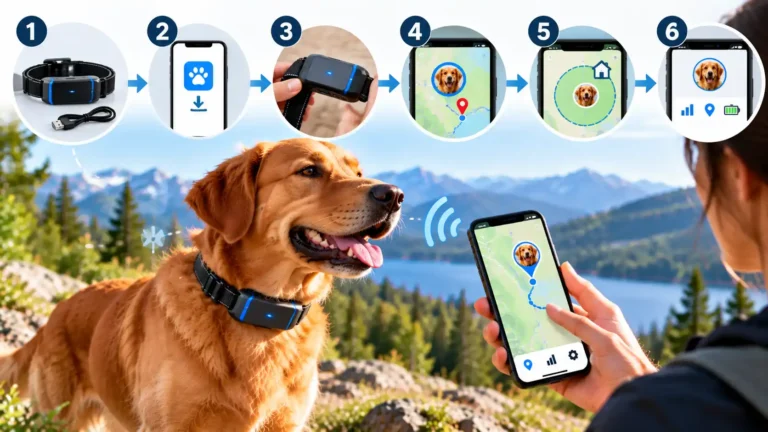
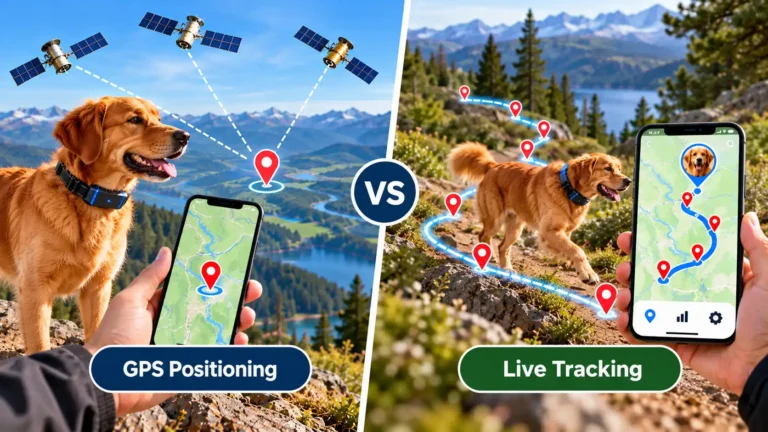
A GPS dog tracker is an electronic device that usually attaches to a dog’s collar or harness. It receives signals from navigation satellites to estimate its position. Many consumer pet trackers then use a cellular network to send that position to an app on the owner’s phone.
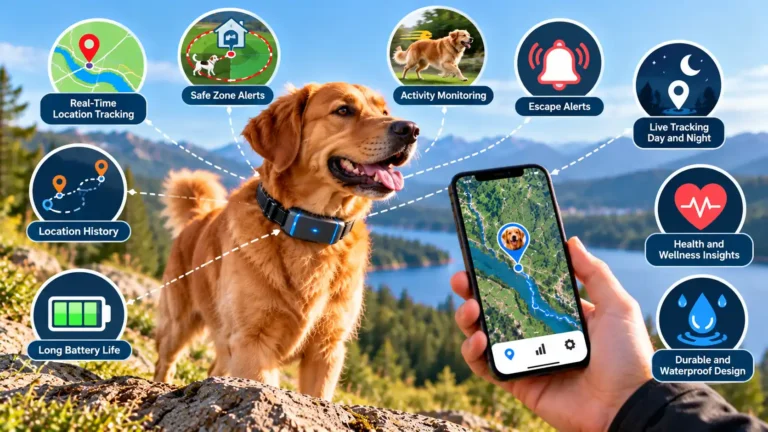
Common GPS tracker features
- Location reporting on a smartphone map.
- More frequent updates through live-tracking modes on supported models.
- Location history or route playback on selected devices and plans.
- Virtual safe-zone alerts, often called geofencing.
- Battery notifications and activity features on some models.
GPS positioning and communication are separate functions. A device can estimate its location but may not be able to send that location to your phone if its cellular connection is unavailable. Some specialist devices use satellite or other communication methods instead.
What Is a Radio-Frequency Dog Tracker?

A radio-frequency dog tracking system uses a radio transmitter attached to the dog and a compatible receiver carried by the handler. The transmitter sends a radio signal that the receiver detects. Depending on the system, the receiver may indicate signal strength, direction or both, helping the handler move towards the transmitter.
These systems are used in some hunting, working-dog and outdoor tracking situations. Their main advantage is that a direct radio link does not necessarily depend on a cellular network or internet connection.
What can an RF dog tracker do?
- Help a handler locate a transmitting collar using a compatible receiver.
- Support tracking in areas where cellular coverage is poor or absent.
- Provide signal-strength or directional guidance on supported equipment.
- Operate without a smartphone app or cellular subscription on many systems.
RF systems vary considerably. Some are designed for directional homing and require the handler to interpret a signal, while other specialist systems provide additional displays or features. Do not assume that every RF tracker provides a precise map pin or distance reading.
How Do GPS and RF Dog Tracking Systems Work?

Position, then report
The tracker estimates its position using satellite signals. A communication link, commonly cellular data, sends the position to the app.
The owner uses the map and location updates to guide the search, subject to coverage and device limitations.

Transmit, then home in
The collar transmits a radio signal. The handler uses a compatible receiver to detect the signal and, on directional systems, follow changes in signal strength or direction.
Terrain and radio conditions influence how easily the signal can be detected and followed.
Does RF tracking need satellites?
A basic radio-frequency tracking system does not need satellite positioning to detect the collar’s radio signal. The handler follows the signal using the receiver. By contrast, a GPS tracker uses satellite signals to estimate position, although it also needs a suitable method to send updates to a remote app.
GPS Dog Trackers vs. Radio-Frequency Trackers: Key Differences
The table below describes common characteristics. Individual devices can differ, so confirm specifications before purchasing.
| Feature | GPS Dog Tracker | RF Dog Tracker |
|---|---|---|
| Core technology | Satellite-based positioning | Radio transmitter and compatible receiver |
| How the handler locates the dog | Usually checks a map in an app | Uses receiver indications and, on directional systems, follows the signal |
| Cellular service | Often required for app-based wide-area updates | Not required for a direct radio link |
| Internet connection | Often needed to deliver and view remote app updates | Usually not needed for direct receiver-based tracking |
| Remote-area use | Depends on satellite reception and the communication method | Can be useful where direct radio reception is available |
| Map-based position | Common on consumer GPS trackers | Not inherent to basic RF systems |
| Practical range | Wide-area tracking when positioning and communications are available | Depends on transmitter, receiver, antenna, terrain and interference |
| Battery requirements | Tracker needs power; phone and network also affect use | Transmitter and receiver need power according to their design |
| Recurring service fee | May require a subscription | Often no cellular subscription for direct RF tracking |
| Typical applications | Everyday pet tracking, travel, walks and location history | Hunting dogs, working dogs and certain remote tracking tasks |
Range and Coverage: Which Works Farther Away?

There is no universal range figure that applies to every GPS or RF dog tracker. The two systems face different constraints.
GPS range and communication
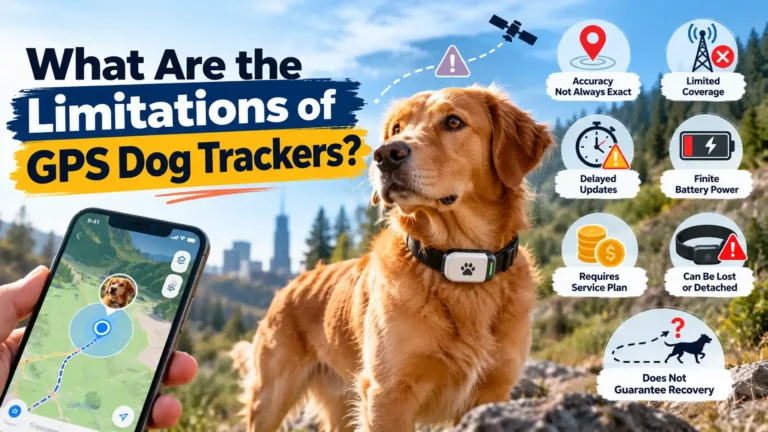
Satellite positioning can estimate a location over a wide geographic area. However, many GPS pet trackers use cellular data to send updates to the owner’s phone. If cellular coverage is unavailable, a cellular-dependent device may be unable to send new positions until connectivity returns, even if the tracker can still estimate its location.
RF range and radio conditions
An RF system depends on its transmitter, receiver, antenna, frequency, output power and surroundings. Open terrain may allow a stronger signal over a greater distance than obstructed terrain, but no particular distance is guaranteed across all equipment and conditions.
Mountains, ridges, dense vegetation, buildings and interference can affect radio reception. A direct RF system may still be useful in a remote area without cellular service, provided the receiver can detect the transmitter’s signal.
Accuracy: Map Coordinates vs. Radio Direction Finding

GPS location estimates
A GPS tracker typically provides coordinates or a map pin. Its accuracy can be affected by satellite visibility, surrounding structures, terrain, device quality and the freshness of the reported location.
A displayed position should be treated as an estimate rather than a guarantee of the dog’s exact physical location.

RF signal direction
Directional RF systems help the handler follow a signal. The receiver’s indications can guide movement, but signal reflections, obstructions and antenna orientation can make direction finding more difficult.
Basic RF tracking does not automatically provide GPS coordinates or a map-based position.
Neither method guarantees that a missing dog will be found. The best choice depends on the environment, the handler’s experience and how the equipment performs under actual conditions.
Battery Life, Equipment and Costs

Battery and costs
- Battery life depends on model, update frequency and settings.
- Frequent live updates can use more power.
- A cellular subscription may be required.
- Some features may require a paid service plan.
Battery and costs
- Both the collar transmitter and receiver may need charging or batteries.
- Operating time varies by device and use.
- Direct RF systems often avoid cellular subscriptions.
- Specialist equipment can have a higher initial cost.
Compare total ownership cost rather than the purchase price alone. Consider replacement batteries, charging equipment, subscription fees, receiver compatibility, maintenance and the time needed to learn how to use the system.
Which Tracker Is Best for Your Dog?
A GPS tracker may suit you if…
- You want a map-based view of your dog’s location.
- You want remote location updates during everyday activities.
- You value supported geofencing or location history.
- The required communication service is available where you use it.
An RF tracker may suit you if…
- You need direct signal tracking without cellular service.
- You work with hunting or other working dogs.
- You are comfortable using a handheld receiver and directional guidance.
- The equipment’s range and radio characteristics suit your terrain.
Can you use both technologies?
Yes. Some handlers may benefit from having GPS location reporting and a separate RF system, particularly where working conditions vary. However, using two devices adds weight, equipment and maintenance. Check collar fit, battery requirements and the manufacturer’s safety instructions before attaching multiple devices.
Buying Checklist: What Should You Check?

- Environment: Identify whether you mostly walk in suburbs, open countryside, forests or mountainous terrain.
- Communication: Check whether GPS reporting depends on cellular service or whether the device supports another method.
- RF specifications: Review supported frequencies, receiver type, antenna requirements and legal restrictions.
- Range claims: Ask how the advertised range was tested and whether the conditions resemble your usual environment.
- Battery: Check operating time for both collar and receiver where applicable.
- Fit and comfort: Make sure the collar unit is secure and appropriate for your dog’s size.
- Weather resistance: Check the device’s actual rating and limitations.
- Costs: Include subscriptions, batteries, accessories, replacement parts and training time.
- Support: Confirm warranty, repair options and compatibility with other equipment.
Test the equipment in a safe, familiar area before relying on it in a remote location. Learn how it behaves when the signal is weak, how to interpret alerts and how to check battery status.
Frequently Asked Questions
1. What is the main difference between GPS and RF dog trackers?
GPS trackers estimate a position using satellite signals and commonly report it through a communication network. RF trackers transmit a radio signal that a compatible receiver detects, helping the handler locate the signal.
2. Does an RF dog tracker work without cellular coverage?
A direct RF system can operate without cellular service if the receiver can detect the transmitter’s signal. Its practical range depends on the equipment, antenna, terrain and radio conditions.
3. Does a GPS dog tracker need cellular coverage?
Many consumer GPS trackers need cellular service to send new locations to a smartphone app. Some specialist products use other communication methods, so check the exact device specifications.
4. Which tracker has a longer range?
There is no universal answer. GPS trackers can report locations over wide areas when their positioning and communication systems are available. RF range depends on the transmitter, receiver, antenna, terrain and interference.
5. Can an RF tracker show my dog on a map?
A basic RF tracking system generally provides signal-based guidance rather than GPS coordinates. Some specialist products combine technologies, so check whether a particular device includes GPS or map features.
6. Are RF trackers better for hunting dogs?
Some hunting and working-dog handlers prefer RF systems because direct radio tracking can be useful where cellular coverage is poor. The best option depends on the work, terrain, equipment and handler’s experience.
7. Do RF dog trackers require a subscription?
Many direct RF systems do not require a cellular tracking subscription. However, costs and included services vary by product, so review the manufacturer’s terms.
8. Which tracker is easier for beginners?
A consumer GPS tracker with a well-designed app may be easier for someone who wants map-based location information. RF systems can require practice interpreting receiver signals and directional guidance.
9. Can GPS and RF trackers be used together?
Yes, if both devices are appropriate for your dog and can be fitted securely. Consider extra weight, battery maintenance and the specific purpose of each system.
10. Does either system guarantee that I will find my dog?
No. Batteries, equipment failures, terrain, signal conditions and communication limits can affect both technologies. Use a tracker alongside a secure collar or harness, identification, microchipping and a prepared lost-dog plan.
Sources and Further Reading
Before buying, consult the current technical documentation for your selected device. Pay particular attention to radio frequency, supported regions, communication method and tested range.
- Federal Communications Commission (FCC) — information on radio communications and applicable US radio regulations.
- GPS.gov — official information about the Global Positioning System.
- National Institute of Standards and Technology (NIST) — technical resources on positioning, timing and measurement.
This article is general educational information. Radio regulations differ by country, and individual tracker capabilities vary by model.